 Go Back


Quick Take
| Key Insights | Details |
|---|---|
| Current Market Trend | Bitcoin's bear market continues |
| Investor Sentiment | Mixed, with long-term holders steady |
| Expected Duration of Consolidation | A few more months of stagnation |
| Potential Impact on Prices | Risk of further decline |
| Long-term Outlook | Possible recovery post-consolidation |
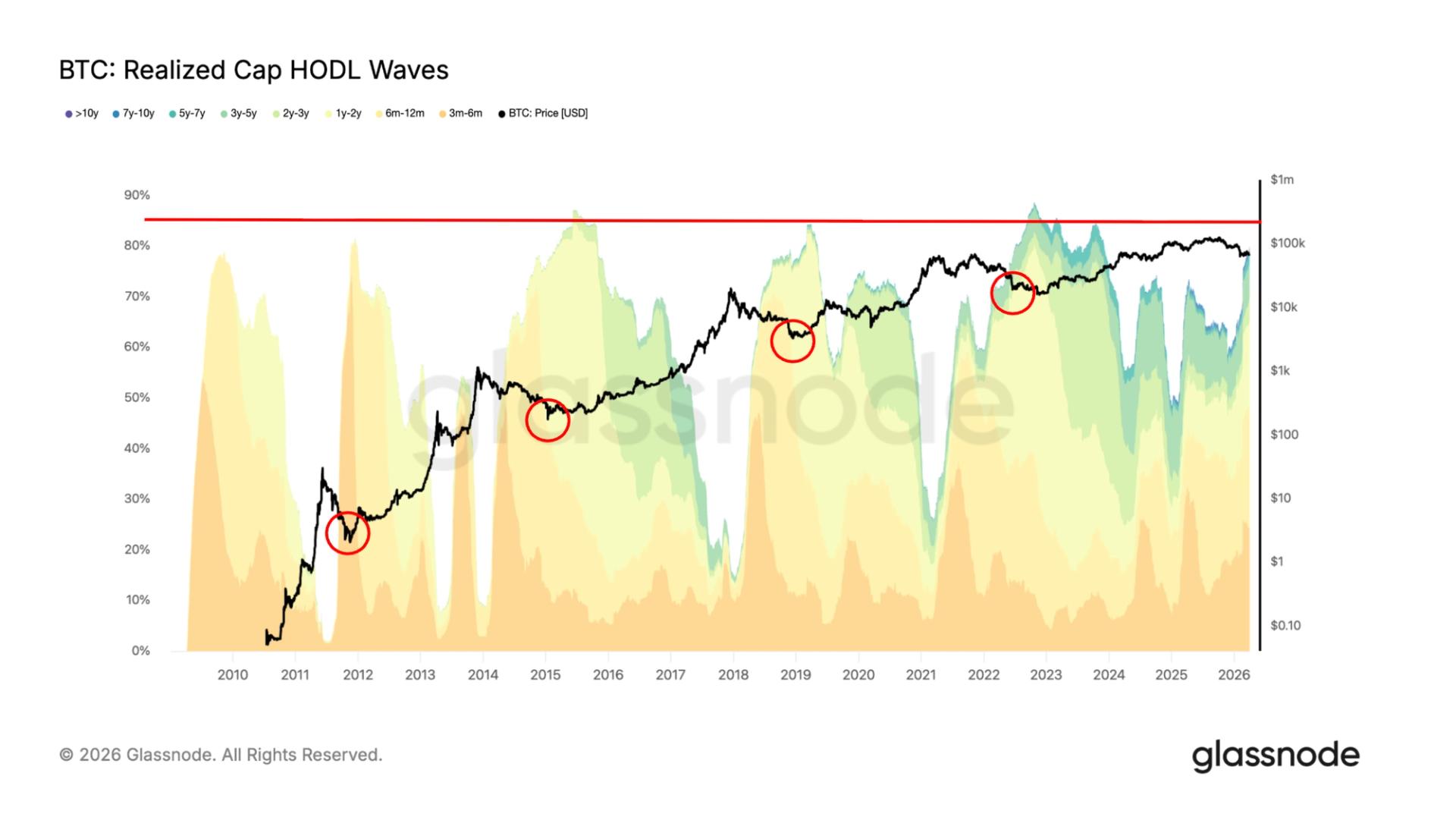
What is the 'Time Pain' Trap in Bitcoin's Bear Market?
In the cryptocurrency realm, particularly with Bitcoin, market cycles are an inherent part of the landscape. Recently, discussions around the so-called 'time pain' trap have taken center stage, suggesting that Bitcoin's current bear market may require a longer period of consolidation before establishing a true price floor. This phenomenon poses significant implications for both investors and the broader market.
Why is Extended Consolidation Occurring?
Long-term Holder Trends
One of the most notable indicators of Bitcoin's current state is the behavior of long-term holders. These holders have been increasingly vocal about their commitment to the asset despite the market's volatility. Historically, Bitcoin has demonstrated resilience during extended downturns, and the loyalty of these holders is a testament to the underlying belief in Bitcoin's value proposition.
However, this loyalty may contribute to prolonged periods of price stagnation. As long-term holders resist selling, new traders and investors could become disheartened by the lack of volatility and potential gains, leading to decreased market activity and liquidity. This could result in extended periods of consolidation, testing the patience of even the most steadfast investors.
Market Sentiment and Investor Patience
Market sentiment is a powerful influencer, particularly in the crypto space where emotional trading often prevails. The current sentiment is mixed, with some investors remaining optimistic about Bitcoin's long-term potential while others are skeptical due to recent price movements. The challenge lies in balancing these sentiments with market realities. The risk of further decline exists as traders grapple with the psychological aspects of investing in a bear market.
Market Context
Historical Patterns of Bitcoin's Bear Markets
Bitcoin has experienced several bear markets throughout its history, each with its unique characteristics and outcomes. The most recent bear market, ranging from late 2017 to early 2019, showcased a prolonged consolidation phase that ultimately led to a significant price recovery. Understanding these historical patterns can provide insight into current market behavior and potential future trends.
- 2018 Bear Market: This market lasted for roughly 12 months and saw Bitcoin's price drop from almost $20,000 to below $3,200. Following this phase, Bitcoin entered a substantial bull run, capturing the attention of mainstream investors.
- 2022 Market Trends: Following the all-time highs in late 2021, Bitcoin's price faced a similar downturn, with many investors hopeful for a rebound similar to previous cycles.
These historical contexts suggest that while Bitcoin may be experiencing a bear market, the window for a rebound is always a possibility, provided that market conditions shift favorably.
Global Economic Influences
Global macroeconomic factors also play a crucial role in shaping market dynamics. Economic uncertainty, interest rates, and inflation rates can all influence investor behavior and sentiment towards riskier assets like Bitcoin. As central banks worldwide navigate their monetary policies, Bitcoin could either be seen as a hedge against inflation or a risky investment to avoid during turbulent times.
Impact on Investors
Short-term vs Long-term Strategies
For investors, the current state of Bitcoin's bear market requires a careful consideration of their investment strategies.
- Short-term Traders: Those looking for quick gains may need to exercise caution. The lack of volatility might dissuade day traders, and the potential for continued downward pressure could lead to losses.
- Long-term Investors: For those with a horizon extending beyond the present, this bear market may represent an opportunity to accumulate more Bitcoin at lower prices. The key is to remain patient and avoid emotional decision-making driven by short-term market fluctuations.
Risk Assessment
Investors must also engage in robust risk assessment practices. Understanding the potential for further price declines is essential in mitigating losses. As consolidation persists, the risk of 'time pain' could frustrate investors who are unprepared for the slower pace of market recovery.
Conclusion
The 'time pain' trap in Bitcoin's current bear market encapsulates the struggles and strategies of investors navigating a tumultuous landscape. While long-term holders show resilience, the extended consolidation phase may challenge patience across the board. By understanding historical context and global economic influences, investors can better position themselves for the eventual recovery that history suggests could follow.
As Bitcoin continues through this bear market, the insights gained during this period will be critical for navigating future market cycles and capitalizing on the opportunities that arise in the ever-evolving world of cryptocurrency.