 Go Back


Bitcoin’s Compute Power and Its Role in AI Monopoly Disruption
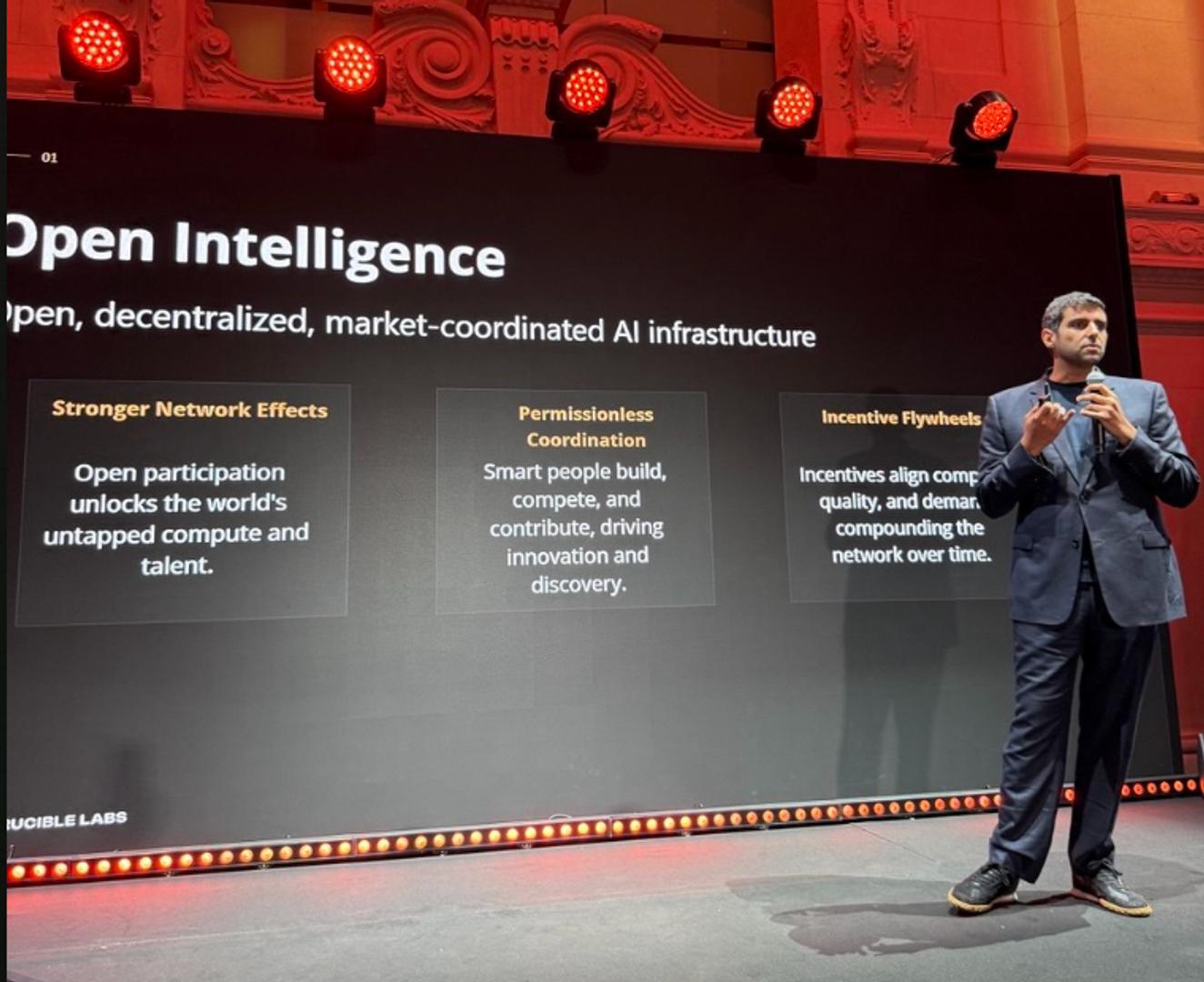
The conversation around Bitcoin's computational prowess has taken an interesting turn, particularly in its potential to disrupt monopolistic practices in the artificial intelligence (AI) sector. Ala Shaabana, co-founder of Bittensor, recently emphasized that the Bitcoin network's computing capabilities surpass the collective power of the top 100 supercomputers by an astonishing factor of 600,000 times. This revelation isn't just a fascinating statistic; it hints at a transformative potential for Bitcoin to influence the AI landscape significantly.
Quick Take
| Aspect | Details |
|---|---|
| Compute Power | Bitcoin network exceeds top 100 supercomputers by 600,000x |
| Monopoly Potential | Bitcoin's structure could challenge AI monopolies |
| Key Figure | Ala Shaabana, Bittensor co-founder |
| Broader Implications | Shifts in power dynamics in the tech industry |
Market Context
The ongoing battle for supremacy in the AI domain has largely been dominated by mega-corporations that possess substantial computational resources and data access. Companies like Google, Amazon, and Microsoft have built extensive infrastructures that enable them to train complex AI models. These tech giants benefit from economies of scale that render competition nearly impossible for smaller players in the market.
However, the emergence of decentralized technologies, particularly Bitcoin, presents a unique counter-narrative. Bitcoin's proof-of-work mechanism has created a network that is not just a digital currency but an expansive computational engine. As Shaabana suggests, leveraging Bitcoin's computing power could offer a new paradigm where smaller entities and individuals can access significant computational resources without relying on traditional corporate ecosystems.
Historical Background
Historically, the rise of computing technology has been synonymous with centralization. From the early days of mainframes to the current dominance of cloud computing, a few corporations have monopolized access to processing power. Bitcoin disrupted this trajectory by decentralizing finance; now, it may be poised to challenge the AI monopolies that have arisen in the wake of this technological revolution. This evolution mirrors the early days of the internet when a handful of corporations controlled access to data, and the emergence of open-source platforms eventually democratized that access.
SWOT Analysis
Strengths
- Decentralization: Bitcoin operates on a decentralized network, making it resistant to the control exerted by corporate giants.
- Incredible Computational Power: The vast computing capacity of the Bitcoin network exceeds that of traditional supercomputers.
- Incentive Structures: Reward mechanisms within Bitcoin could incentivize computation for more democratic purposes.
Weaknesses
- Energy Consumption: Bitcoin’s proof-of-work requires significant energy, raising sustainability concerns that could hinder wider adoption.
- Scalability Issues: As the demand for computational resources grows, Bitcoin must overcome scalability challenges to maintain its edge.
- Regulatory Risks: Increasing scrutiny from governments could impose restrictions that limit Bitcoin's potential impact on AI monopolies.
Opportunities
- Disruption of AI Monopolies: By providing a decentralized platform for AI computation, Bitcoin can democratize access to technology and foster innovation.
- Integration with AI Innovations: Collaborations between blockchain technology and AI could lead to groundbreaking applications that were previously unimaginable.
- Investor Interest: As awareness of these potentials grows, a new wave of investors may flock to Bitcoin, bolstering its market value.
Threats
- Competing Technologies: Other decentralized computing models, like Ethereum or emerging blockchain technologies, may provide stiff competition.
- Shifts in Regulatory Frameworks: Governments may implement stricter regulations that could limit the utility of Bitcoin for AI computation.
- Public Perception: Misunderstanding of Bitcoin’s environmental impact could lead to negative sentiment and reduced adoption.
Impact on Investors
Bitcoin's potential to disrupt AI monopolies can have significant implications for investors. As the narrative evolves, investments in Bitcoin may not only be viewed as speculative assets but also as stakes in a transformative technology that could reshape the future of AI. Early adopters who understand and invest in this emerging dynamic could see substantial returns, particularly as institutional interest in Bitcoin continues to grow.
Moreover, the intersection of Bitcoin and AI offers new opportunities for value creation. Investors could benefit from projects that leverage Bitcoin to develop decentralized AI solutions, providing a competitive edge in a rapidly evolving market.
Conclusion
In summary, Bitcoin's compute power offers a transformative opportunity to challenge entrenched AI monopolies in a way that could democratize access to cutting-edge technology. As the landscape evolves, understanding the intersection of cryptocurrency and AI will be crucial for investors looking to navigate this new frontier. The potential to disrupt traditional power structures not only enhances Bitcoin's appeal but also positions it as a key player in the ongoing evolution of technology.
Investors and technologists alike should keep a close eye on how these developments unfold, as they might just shape the next chapter in both the crypto and AI narratives.