 Go Back


Bitcoin's Future: $40,000 as a Statistical Outlier
The cryptocurrency market is often characterized by its volatility and rapid shifts in investor sentiment. A recent analysis from CoinDesk posits that if Bitcoin were to drop to $40,000, it would represent a statistical anomaly, with such a bearish target falling within the 0.4th percentile of expected outcomes based on mean-reversion models.
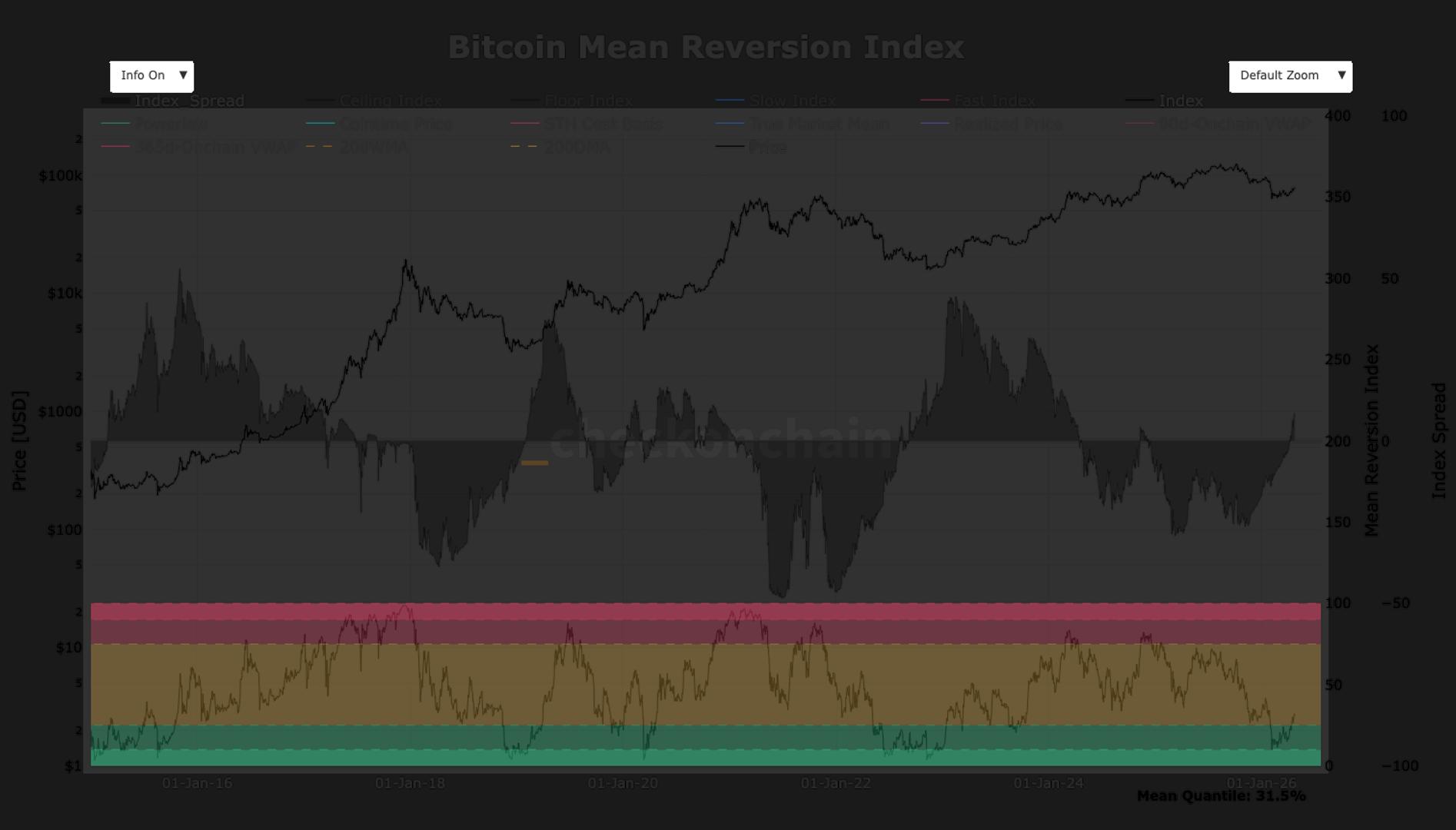
Quick Take
| Metric | Value |
|---|---|
| Current Bitcoin Price | $XX,XXX |
| Bearish Target Price | $40,000 |
| Statistical Percentile | 0.4th percentile |
| Implication | Rare market event |
What Does This Mean for Investors?
The assertion by analysts that Bitcoin at $40,000 would represent a near-unprecedented occurrence merits serious consideration from both current and potential investors. It suggests that the market is experiencing unique pressures that are not typically seen in standard market cycles.
Market Context
Bitcoin’s price has historically followed a cyclical pattern influenced by various macroeconomic factors, including regulatory developments, technological advancements, and shifts in investor sentiment. In contrast, the current landscape is shaped by:
- Regulatory Scrutiny: Governments worldwide are contemplating stricter regulations on cryptocurrencies, which can lead to increased volatility.
- Global Economic Conditions: Inflation rates, interest rates, and geopolitical tensions can all impact investor behavior in the cryptocurrency market. For instance, if inflation remains high, traditional investors may seek refuge in Bitcoin, pushing prices upward. Conversely, a tightening of monetary policy could negatively impact asset prices.
- Market Maturity: The cryptocurrency market continues to mature with the introduction of institutional investors and financial products such as ETFs. This maturity could lead to reduced volatility but could also mean more significant market reactions to macroeconomic indicators.
These factors contribute to a complex environment where a drop to $40,000 could signify not just a market correction, but a seismic shift in how cryptocurrencies are perceived.
Impact on Investors
Short-Term vs. Long-Term Perspectives
For short-term traders, the potential for Bitcoin to hit $40,000 raises questions about risk management. With a bearish prediction characterized as a statistical outlier, traders may need to adjust their strategies to account for this possibility. This adjustment might include:
- Setting tighter stop-loss orders
- Diversifying portfolios to include stablecoins or traditional assets
- Monitoring macroeconomic indicators closely for signs of impending volatility
In contrast, long-term investors may view a drop to $40,000 as an opportunity to accumulate more Bitcoin at a lower price. Historically, Bitcoin has shown resilience, rebounding from significant corrections to reach new highs. However, it is crucial for investors to remain vigilant and consider the following:
- Investment Horizon: Long-term holders should have a well-defined investment strategy and an understanding of their risk tolerance.
- Market Research: Continuous education on market dynamics and economic conditions can empower investors to make informed decisions.
- Psychological Resilience: The emotional toll of market volatility can lead to irrational decision-making. Having a clear plan can mitigate this risk.
Conclusion: A Call for Caution
The prediction of Bitcoin hitting $40,000 as a near-unprecedented event serves as a stark reminder of the unpredictability of the cryptocurrency markets. Investors should carefully assess their positions and approach the market with a blend of caution and strategic foresight.
As the global economic environment continues to evolve, understanding the implications of such drastic shifts in Bitcoin's pricing will be crucial for maintaining a balanced portfolio. By staying informed and adaptable, investors can better navigate the complexities of the cryptocurrency landscape, regardless of market fluctuations.