 Go Back


Bitcoin Futures Trading: The End of CME Gaps and Market Evolution
As cryptocurrency markets continue to mature, recent developments indicate a pivotal shift in Bitcoin trading dynamics. The launch of round-the-clock Bitcoin futures trading is set to eliminate the notorious CME weekend gaps, a phenomenon that has long intrigued investors and market analysts alike. This transition not only signals a deeper integration of institutional players into the crypto space but also raises important questions about market behavior and investor strategies.
Quick Take
| Aspect | Details |
|---|---|
| Change | Round-the-clock Bitcoin futures trading |
| CME Gaps | Elimination of traditional weekend gaps |
| Impact on Institutions | Greater integration into crypto markets |
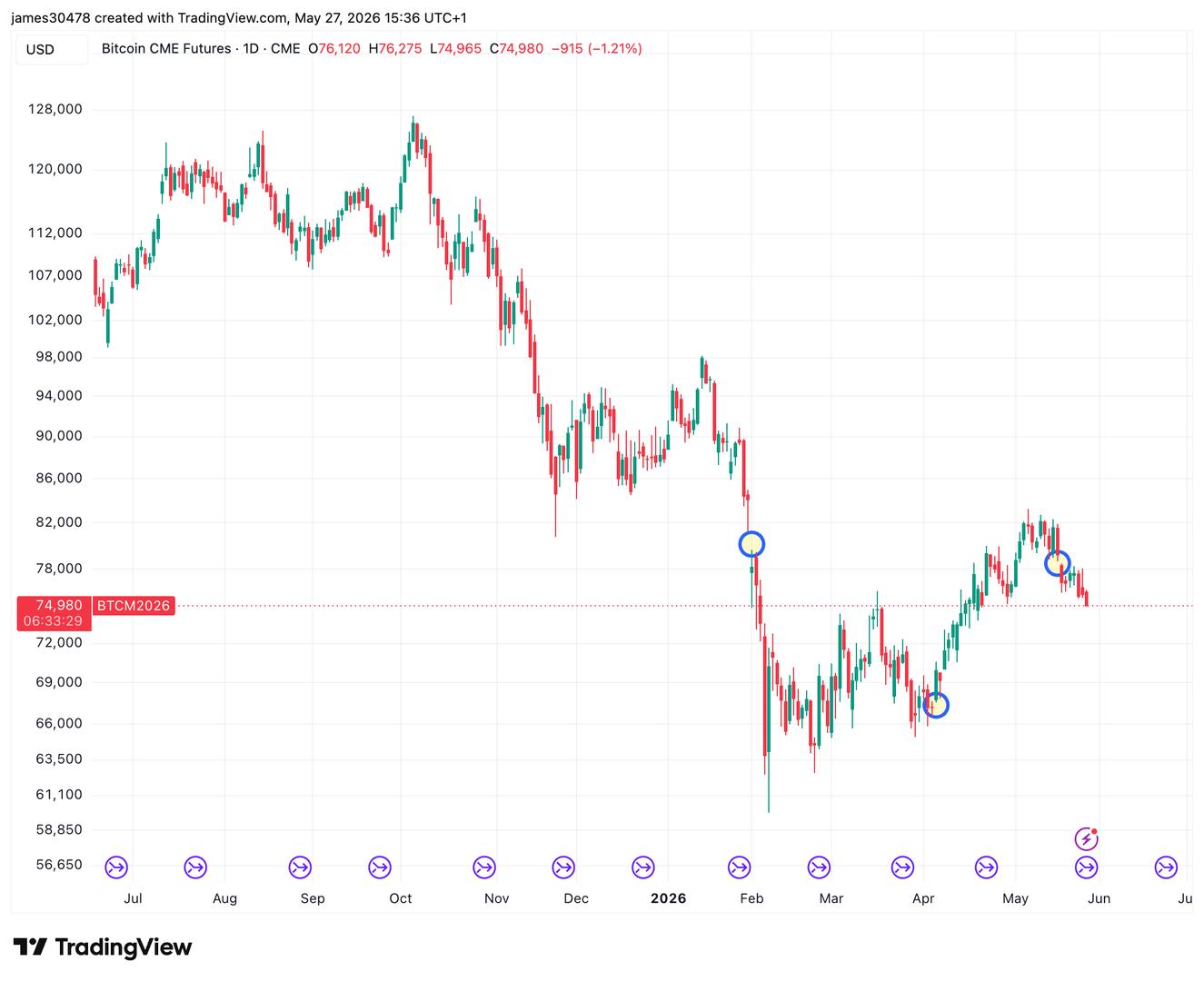
| Remaining Gaps | Three unresolved CME gaps remain |
What Are CME Gaps?
CME gaps refer to the price discrepancies that occur in Bitcoin’s price when trading opens on the Chicago Mercantile Exchange (CME) after the weekend. These gaps arise because the market operates 24/7, while the CME only trades Monday through Friday. The gaps have historically been viewed as a phenomenon that traders could exploit, leading to speculation about price corrections once the market reopened.
How Will Round-the-Clock Trading Change the Landscape?
The introduction of continuous Bitcoin futures trading effectively removes the weekend trading gaps that have been a staple of market analysis. This development suggests that there will no longer be a significant price difference between the close on Friday and the open on Sunday. This change could lead to:
- Increased Market Efficiency: With more constant trading, price discovery could become more efficient, making it harder for gaps to manifest.
- Reduced Volatility: The elimination of gaps could lead to reduced volatility, as prices may stabilize more predictably instead of experiencing sharp movements immediately after the weekend.
- New Trading Strategies: Traders may need to adjust their strategies to accommodate the new trading environment, potentially focusing more on intraday price movements rather than gap trading.
Market Context
Historically, the cryptocurrency market has been characterized by high volatility and rapid price movements. The CME gaps have acted as a barometer for market sentiment, with many traders viewing these discrepancies as opportunities for arbitrage. However, the shift to 24/7 trading indicates a larger trend toward institutional adoption of cryptocurrencies, where more traditional trading principles are applied.
Institutions have long sought greater stability in their trading practices, and the ability to trade Bitcoin futures continuously aligns with their operational models. As more institutional players enter the space, the overall market dynamics are likely to change, leading to:
- A Push Towards Regulation: Increased institutional participation often brings about calls for clearer regulations, which could further stabilize the market.
- Enhanced Market Integrity: Continuous trading could reduce the incidence of manipulation that can occur during off-hours, leading to a more trustworthy market environment.
Impact on Investors
The shift to continuous trading of Bitcoin futures could have profound implications for investors, both retail and institutional:
- Long-term Investment Strategies: Investors may start to see Bitcoin less as a speculative asset and more as a stable investment option, similar to traditional securities. This perception could lead to increased adoption.
- Risk Management: With reduced price gaps, investors can manage their risks more efficiently, making it easier to set stop-loss and take-profit levels.
- Diversification Opportunities: As institutions begin to treat Bitcoin as part of a diversified portfolio, the asset could gain legitimacy, attracting more capital from different sectors.
Unresolved Gaps
Despite this major development, it’s important to note that three CME gaps remain unresolved. As the market adapts to the new trading environment, these gaps may still influence trader psychology and market perceptions. Investors should remain vigilant, as these gaps could present unique trading opportunities depending on market conditions.
Conclusion
The transition to round-the-clock Bitcoin futures trading marks a significant milestone in the evolution of cryptocurrency markets. By eliminating CME gaps, the market moves closer to maturity, indicating stronger institutional integration and potentially reshaping investor strategies. As the crypto landscape continues to evolve, investors will need to remain adaptable and informed in order to navigate this new terrain effectively.
Ultimately, the future of Bitcoin and its associated trading mechanisms appears bright as it moves further into the mainstream financial ecosystem.