 Go Back


Bitcoin's Implied Volatility Hits 7-Month Low Amid Macro Risks
As Bitcoin (BTC) continues to navigate an increasingly complex global financial landscape, recent data indicates that its implied volatility has dropped to a seven-month low. This trend raises intriguing questions: why is there a sense of calm in the crypto markets despite looming macroeconomic risks? Let's delve into the details.
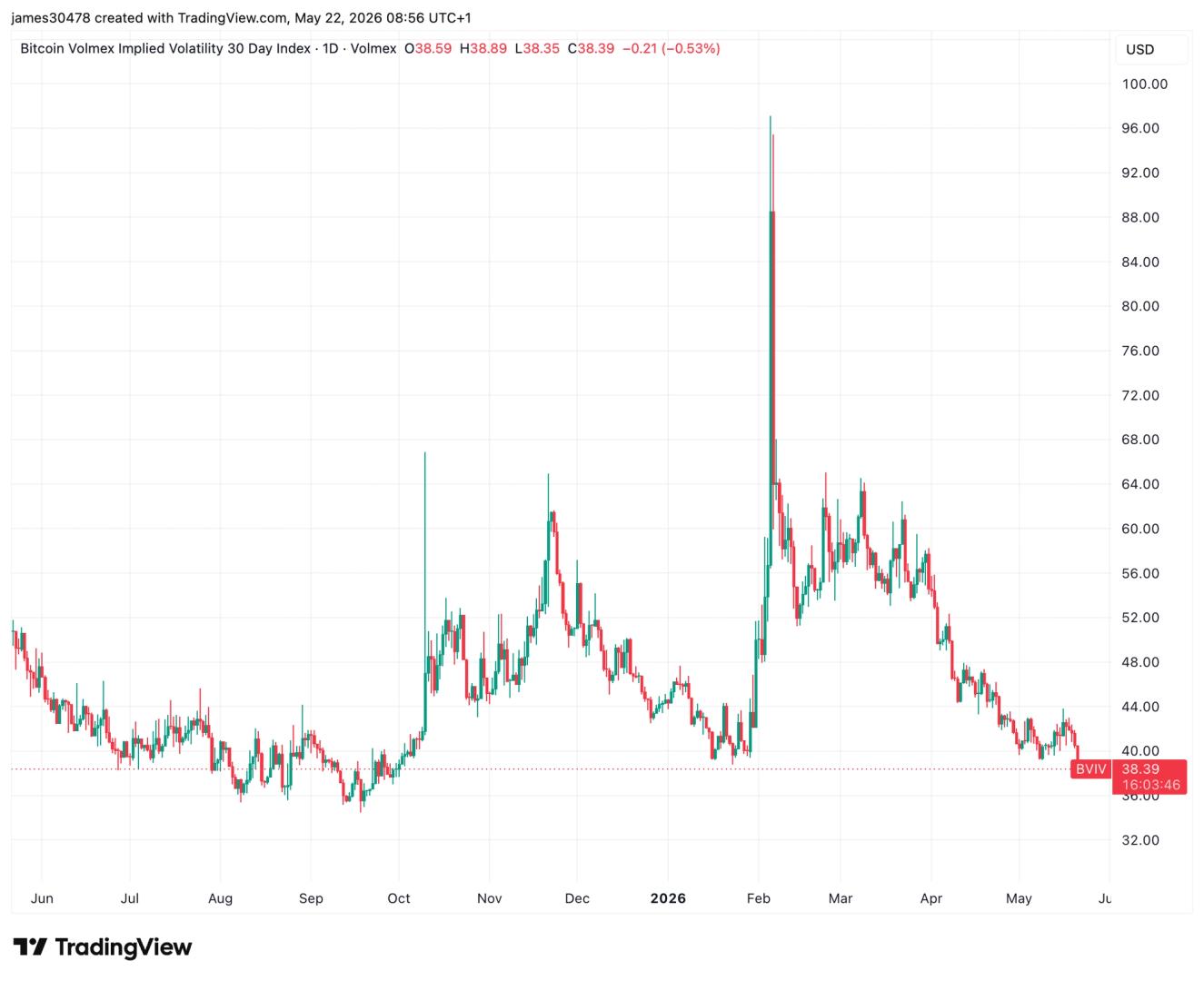
Quick Take
| Metric | Current Value |
|---|---|
| Bitcoin Implied Volatility | 7-Month Low |
| Market Sentiment | Cautiously Optimistic |
| Macro Risks | High (Inflation, Rate Hikes) |
The Good: Stability in Volatility
One of the most significant aspects of Bitcoin's recent performance is its implied volatility. The decline to a seven-month low suggests that traders may be less fearful of sudden price swings in the near future. This stability can be interpreted positively as it indicates:
- Market Maturity: A lower implied volatility may suggest that the market is maturing, with participants becoming more accustomed to price fluctuations.
- Institutional Participation: Increased involvement from institutional investors often leads to more stable pricing, as these entities tend to approach crypto investments with a more strategic lens.
- Long-Term Confidence: A less volatile environment may encourage retail investors to enter the market, bolstered by a more optimistic long-term outlook for Bitcoin.
The Bad: Macro Risks Looming Large
While the decline in implied volatility might appear favorable, it shouldn’t obscure the shadow of macroeconomic risks that persist:
- Inflation: Rising inflation rates have caused significant concern across global markets. As central banks respond with tightening measures, the risk of recession grows, potentially impacting Bitcoin's performance.
- Interest Rate Hikes: With interest rates on the rise, the opportunity cost of holding non-yielding assets like Bitcoin increases. This can lead to reduced demand as investors seek safer, interest-bearing alternatives.
- Geopolitical Tensions: Ongoing conflicts and trade disputes can create an unpredictable environment, leading to market hesitance as investors look for safe havens.
The Ugly: Investor Sentiment and Market Reactions
The juxtaposition of low implied volatility and high macroeconomic risks reveals a complex investor sentiment:
- Cautious Optimism: While there is a general sense of calm, many investors remain on edge, aware that external factors could still instigate sharp market reactions.
- Volatility Triggers: Events such as regulatory changes, major economic reports, or geopolitical unrest could suddenly alter the currently stable market conditions.
Market Context
The current state of Bitcoin's implied volatility is indicative of broader market trends. Historically, periods of low volatility have often preceded significant price movements, either upwards or downwards. Understanding this context is crucial for investors:
- Historical Patterns: Bitcoin has a history of experiencing explosive price movements following periods of low volatility. Investors should be cautious; the calm before the storm is a common narrative in crypto.
- Comparison with Traditional Markets: Traditional markets, such as equities, are also experiencing shifts in volatility. Bitcoin's low implied volatility can reflect a correlation with the overall market environment, where uncertainty reigns due to macroeconomic factors.
Impact on Investors
For current and potential Bitcoin investors, the implications of declining implied volatility amidst macroeconomic risks are profound:
- Opportunistic Strategies: With lower volatility, options traders may find opportunities in strategies such as selling options to capitalize on the relatively stable price environment.
- Risk Assessment: Investors must conduct thorough risk assessments, balancing the allure of entering a less volatile market with the underlying macroeconomic threats.
- Long-Term vs. Short-Term: Long-term investors might view this as an opportunity to accumulate Bitcoin at potentially lower prices, while short-term traders need to remain vigilant about any signs of volatility spikes.
Conclusion
Bitcoin's implied volatility reaching a seven-month low may signal a moment of calm in an otherwise stormy macroeconomic landscape. Investors should remain aware of the fine line between stability and impending volatility, as macroeconomic factors continue to brew. Understanding these dynamics will be essential for navigating the crypto waters in the coming months.
Tags
- Bitcoin
- Cryptocurrency
- Market Analysis
- Volatility
- Macroeconomic Factors