 Go Back


Bitcoin's Market Resilience: Analyzing Macroeconomic Factors
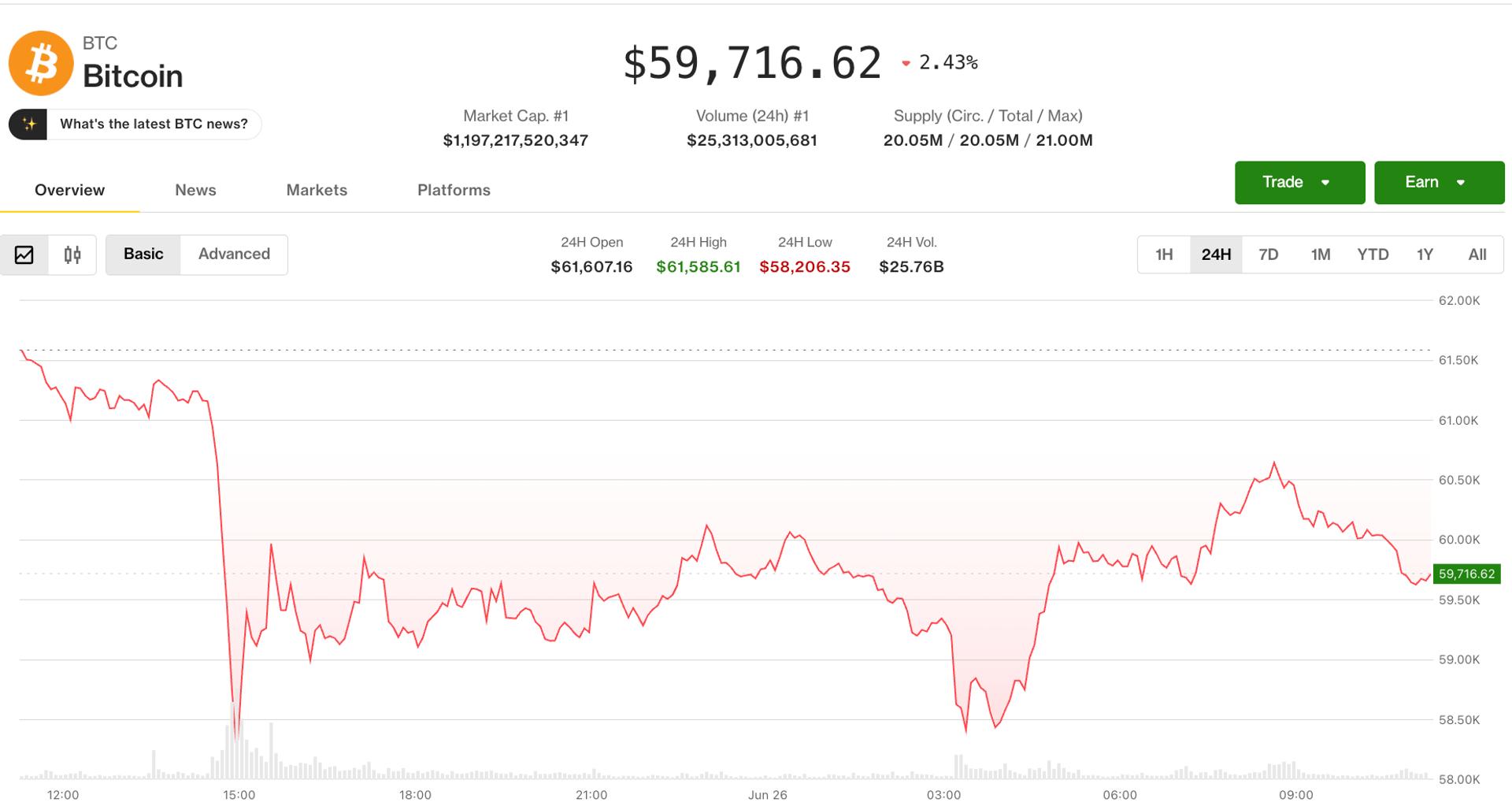
Bitcoin recently experienced a notable dip, touching its lowest level since September 2024 at approximately $58,000 before rebounding to around $59,770. This volatility, compounded by a significant decline in Ethereum and the wiping out of $1 billion in futures positions, signals a turbulent phase for the crypto market. In this blog post, we will explore the macroeconomic factors at play and provide a deep analysis of Bitcoin's current market dynamics.
Quick Take
| Key Points | Details |
|---|---|
| Current BTC Price | $59,770 |
| Recent Low | $58,000 |
| Impact on ETH | Further decline observed |
| Futures Positions Liquidated | $1 billion |
Market Context
The cryptocurrency market is often viewed as a barometer of investor sentiment and macroeconomic health. As traditional markets face inflationary pressures, rising interest rates, and geopolitical tensions, Bitcoin and other cryptocurrencies are feeling the impact. Investors are increasingly sensitive to these external factors, leading to heightened volatility in derivatives trading.
Historical Perspective
Bitcoin's price history showcases its resilience through various macroeconomic climates. From its inception in 2009, Bitcoin has undergone several boom-and-bust cycles, often correlated with broader economic events. For instance, during the COVID-19 pandemic, Bitcoin's value surged as a hedge against inflation. However, the recent downturn reflects a shift in investor sentiment as the landscape evolves again.
Current Market Dynamics
The recent price fluctuations coincide with larger economic narratives, including:
- Interest Rate Hikes: As central banks globally tighten monetary policy to combat inflation, risk assets like Bitcoin often face downward pressure.
- Geopolitical Tension: Ongoing uncertainties, such as conflicts and trade wars, also contribute to market volatility.
- Regulatory Scrutiny: Increasing scrutiny from regulatory bodies regarding cryptocurrency trading and derivatives could be impacting investor confidence.
SWOT Analysis
Strengths
- Brand Recognition: Bitcoin remains the leading cryptocurrency, enjoying widespread recognition and trust.
- Network Effects: Its established network enhances security and transaction reliability, attracting new users and investors.
Weaknesses
- Volatility: Bitcoin's price remains highly volatile, often influenced by external macroeconomic factors and market speculation.
- Regulatory Risks: Uncertainty surrounding regulations could hinder institutional adoption and investment.
Opportunities
- Institutional Adoption: As more institutional investors enter the cryptocurrency market, Bitcoin's price could benefit from increased demand.
- Technological Advancements: Innovations in blockchain technology could improve Bitcoin’s scalability and transaction efficiency, potentially enhancing its value proposition.
Threats
- Market Manipulation: The crypto derivatives market is susceptible to manipulation, leading to sudden price drops and increased volatility.
- Competition: The rise of alternative cryptocurrencies (altcoins) could threaten Bitcoin's market dominance.
Impact on Investors
Investors must remain vigilant in the current market climate. The liquidity crisis in derivatives, coupled with macroeconomic uncertainties, poses challenges. The recent liquidation of $1 billion in futures positions highlights the risks associated with leverage in highly volatile environments.
Strategies for Investors
- Diversification: Spreading investments across different assets may mitigate risk.
- Stay Informed: Keeping abreast of macroeconomic trends and regulatory changes is crucial for making informed investment decisions.
- Long-term Focus: Given Bitcoin's historical resilience, a long-term investment strategy may be beneficial despite short-term volatility.
Conclusion
The current situation illustrates a complex interplay between Bitcoin's inherent strengths and the macroeconomic challenges it faces. As investors navigate this landscape, understanding these dynamics is essential for making informed decisions. While there may be pain in the pipeline, Bitcoin's historical resilience could pave the way for recovery in a continuously evolving market.