 Go Back


Bitcoin Plummets: Analyzing the $300 Million Liquidation Impact
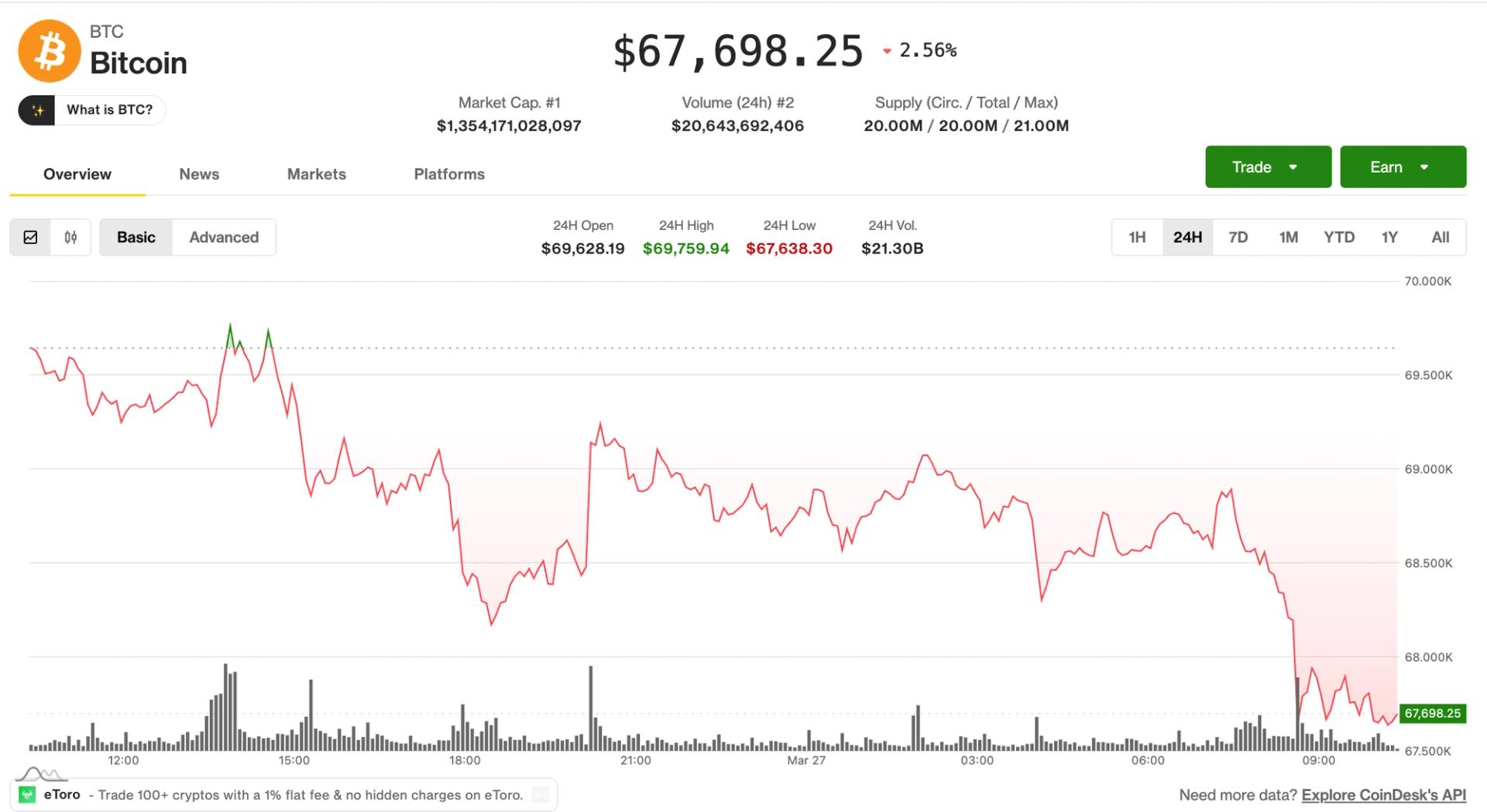
In a significant shift within the cryptocurrency market, Bitcoin recently fell below $67,000, marking its lowest point in two weeks. This sharp decline coincided with the liquidation of approximately $300 million in leveraged long positions, reflecting a prevailing sense of fragility among investors. Simultaneously, Ether approached the $2,000 mark as equities weakened and oil prices surged beyond $100 per barrel, adding further complexity to the landscape.
Quick Take
| Metric | Value |
|---|---|
| Bitcoin Price | $67,000 |
| Ether Price | $2,000 |
| Liquidated Long Positions | $300M |
| Oil Price | $100+ |
The Good, The Bad, and The Ugly of Current Market Conditions
The Good
Despite the current downturn, there are some silver linings worth mentioning. The recent price corrections can often act as a barometer for the overall health of a market. In the past, Bitcoin has demonstrated resilience and the capability to rebound after such retracements, often leading to even higher price levels. Additionally, a focus on longer-term investment strategies can provide an opportunity for seasoned investors to accumulate assets at a discount during these fluctuations.
The Bad
On the downside, the liquidation of $300 million in long positions raises red flags about leverage in the market. Leveraged trading can amplify gains but also significantly heightens risks, leading to rapid sell-offs when market sentiment shifts. This suggests that many investors were caught off guard by the severity of the price drop, indicating a lack of risk management among a segment of market participants. Furthermore, the correlation between cryptocurrency and traditional financial markets, such as equities, can lead to increased vulnerability during macroeconomic downturns.
The Ugly
The most concerning aspect of this market movement stems from the intertwined nature of global macroeconomic conditions. Oil prices reaching $100 and the weakening of equity markets signal broader economic instability. Factors such as inflation, geopolitical tensions, and monetary policy shifts can further exacerbate this volatility. If investor sentiment continues to waver, the cryptocurrency market could face prolonged periods of uncertainty and price declines, affecting retail and institutional investors alike.
Market Context
The current fluctuations in Bitcoin prices can be better understood against the backdrop of several significant macroeconomic factors:
Global Economic Sentiment: As global markets react to rising inflation and potential interest rate hikes, risk assets, including cryptocurrencies, are often sold off in favor of safer investments. This trend has been pronounced in recent weeks and showcases how external economic indicators can heavily influence crypto markets.
Oil Prices and Inflation: The surge in oil prices over $100 per barrel feeds into inflationary pressures, which can dampen consumer spending and investment confidence. A correlation can be drawn between high oil prices and reduced appetite for riskier assets, including Bitcoin and other cryptocurrencies.
Market Cycles: Historically, cryptocurrencies have exhibited cyclical behavior, where periods of rapid price appreciation are often followed by sharp corrections. This pattern, coupled with leveraged positions, creates a volatile trading environment that can lead to severe liquidations when market sentiment shifts.
Impact on Investors
For investors, the recent price drop and liquidation of long positions highlight several important considerations:
Risk Management: The liquidation event illustrates the necessity for cautious leverage use in trading strategies. Investors should remain vigilant and implement robust risk management techniques, especially in volatile market conditions.
Long-Term vs. Short-Term Strategies: While short-term traders may face losses due to these fluctuations, long-term investors can view the dip as an opportunity to strengthen their positions. A focus on fundamental analysis and market adoption can guide investment decisions in challenging times.
Market Sentiment: Ongoing shifts in market sentiment can lead to further price volatility. Understanding the psychological aspects of trading, such as fear and greed, can provide insights into potential market movements. Investors should keep abreast of macroeconomic news to better gauge market responses.
Conclusion
The recent drop in Bitcoin and the liquidation of significant long positions signify a moment of caution within the cryptocurrency market. While the current environment poses challenges, it also presents opportunities for adaptive investors. Keeping a close eye on macroeconomic trends and market sentiment can better prepare investors for future market shifts.
By understanding the broader context surrounding Bitcoin’s price movements, investors can navigate this volatility with greater insight and strategic foresight.