 Go Back


Bitcoin's Power Law Low: Time for a Rebound?
Bitcoin is once again at a critical juncture, as it hits a power law level low that historically precedes a rebound. This situation bears resemblance to the market dynamics observed during major downturns like the March 2020 COVID-19 crash and the infamous FTX collapse. As traders and investors navigate this uncertain landscape, it raises the question: Is now the time to buy, or are we merely witnessing a temporary dip before further declines?
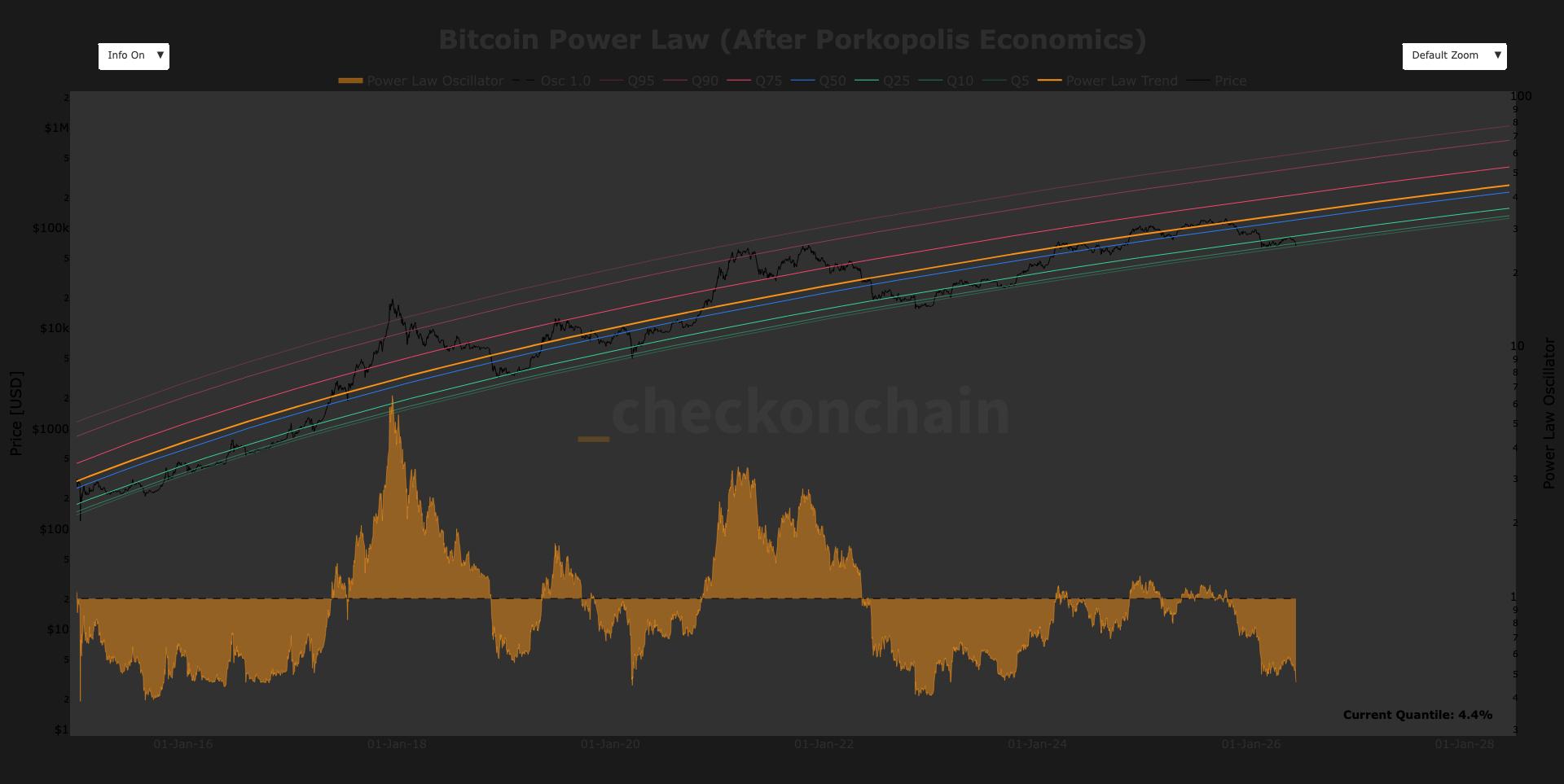
Quick Take
| Metric | Current Status | Historical Comparison |
|---|---|---|
| Bitcoin Price | Trading at a significant discount | Similar to March 2020 and FTX crash |
| Market Sentiment | Bearish | Historical rebounds typically follow such sentiment |
| Power Law Indicator | At a critical low | Predictive of past price recoveries |
The Good
Historical Precedents
Historically, Bitcoin has shown remarkable resilience after reaching similar low points. The power law model indicates a pattern where previous lows created a springboard for significant recoveries. For instance, following the March 2020 crash, Bitcoin rebounded dramatically as institutions began to adopt the cryptocurrency, driven by a broader acceptance of digital assets amid global economic uncertainty.
Institutional Interest
Despite the current bearish sentiment, institutional interest in Bitcoin and other cryptocurrencies remains strong. Major financial players are increasingly viewing Bitcoin as a hedge against inflation and a potential store of value, similar to digital gold. This long-term perspective could provide the support needed to stabilize prices as retail investors react to market signals.
The Bad
Market Sentiment and Speculation
On the flip side, the prevailing market sentiment is decidedly bearish. The fear and uncertainty stemming from recent regulatory scrutiny and macroeconomic challenges could limit immediate upward momentum. Additionally, speculative trading can exacerbate volatility, leading to panic selling if prices fall further.
Economic Context
The macroeconomic environment is less favorable than during previous recoveries. Inflation rates remain high, and global financial markets are grappling with interest rate hikes. Such conditions can exert downward pressure on risk assets, including cryptocurrencies. Investors might be hesitant to enter the market until there is more clarity regarding economic stability and potential policy changes.
The Ugly
Potential for Further Declines
While the power law model suggests a potential rebound, there is also a risk that Bitcoin could experience further declines before a recovery takes hold. The current low may not be the ultimate bottom, and in the absence of significant buying pressure, prices could continue to slide. This scenario has been played out before, where temporary rallies are followed by deeper corrections, leaving investors in a constant state of uncertainty.
Market Manipulation Risks
Additionally, market manipulation remains a severe concern in the cryptocurrency space. The lack of regulatory oversight can lead to price volatility driven by a handful of players, which undermines overall market integrity. This risk complicates the decision-making process for long-term investors, making it more challenging to trust the current signals.
Market Context
Understanding the broader market context is crucial at this juncture. The interplay between macroeconomic factors, regulatory developments, and sentiments among retail and institutional investors creates a complex landscape. As Bitcoin trades at a historic low relative to its trend, future price action will likely depend on catalysts such as news regarding regulatory clarity, advancements in blockchain technology, and overall market recovery.
Impact on Investors
For investors, this moment presents both opportunity and risk. Those with a long-term outlook might see this as an opportunity to accumulate Bitcoin at discounted prices, banking on the historical patterns of recovery. Conversely, short-term traders need to exercise caution, as the potential for further declines could lead to significant losses.
As Bitcoin sits at this critical power law low, market participants must remain vigilant, continuously evaluating their strategies against the backdrop of evolving market conditions. Whether this level will indeed precede a robust rebound or merely signal further challenges remains to be seen. Only time will tell if Bitcoin can reclaim its previous highs or if it will need to undergo substantial restructuring in the face of an ever-changing financial landscape.