 Go Back


Bitcoin's Price Pullback: Analyzing Global Macroeconomic Influences
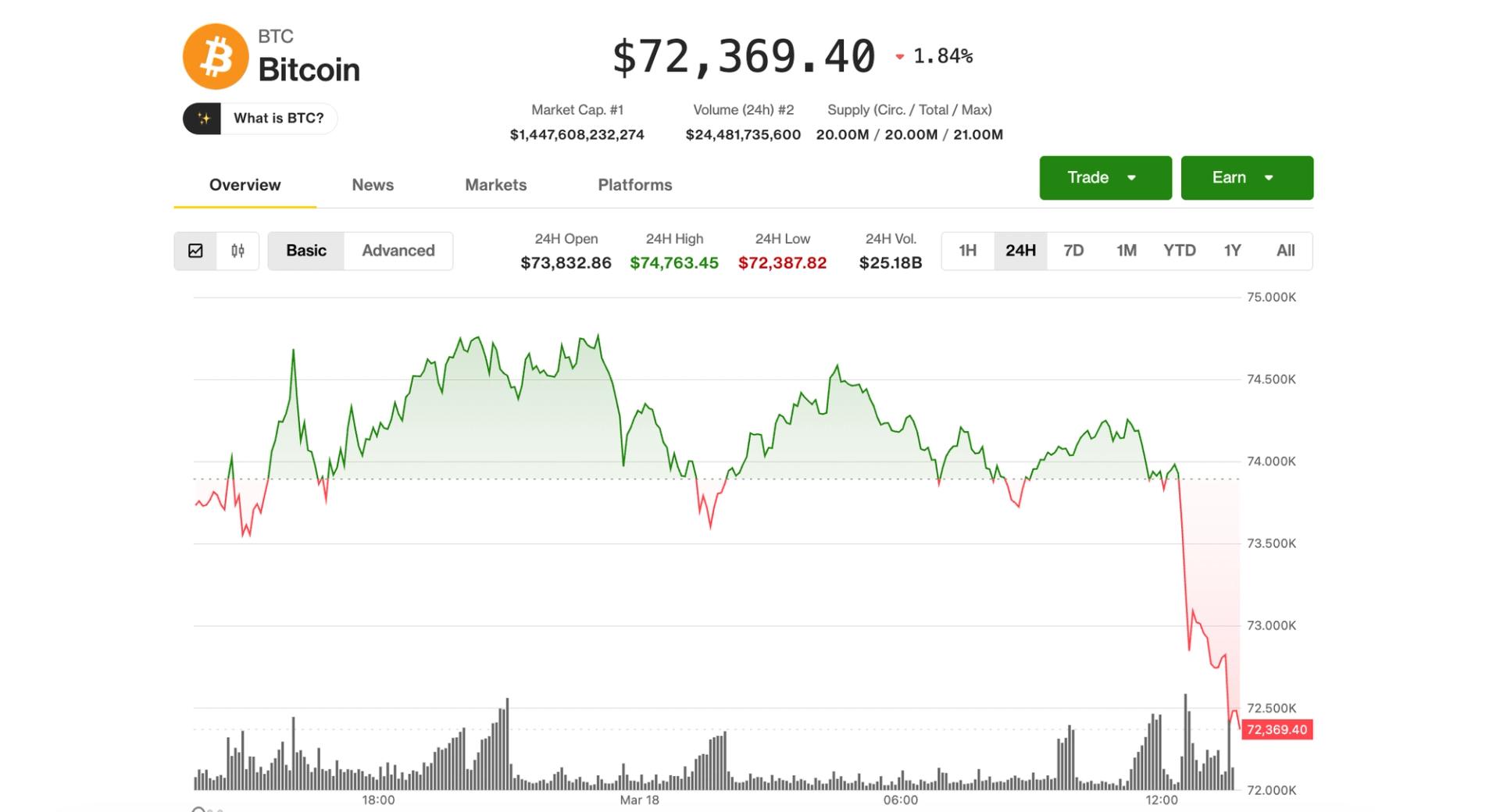
As the cryptocurrency market continues to evolve, Bitcoin has found itself in a tumultuous situation recently, pulling back to $72,300 amidst rising geopolitical tensions and disappointing U.S. inflation data. The question on everyone’s mind is: what does this mean for Bitcoin in the context of a rapidly changing global economy?
Quick Take
| Event | Impact on Bitcoin Price |
|---|---|
| Attacks on Iran's Gas Field | Increased oil prices |
| Poor U.S. Inflation Data | Negative sentiment |
| Bitcoin Price Pullback | Drops to $72,300 |
What Factors Are Influencing Bitcoin's Recent Pullback?
Bitcoin’s recent pullback can be attributed to several macroeconomic events, including geopolitical tensions in the Middle East and disappointing economic indicators from the United States. The reported attacks against Iran's South Pars gas field have contributed to a spike in oil prices, which typically leads to increased market volatility. In tandem with this, poor inflation data from the U.S. has added further uncertainty to the economic landscape, influencing investor sentiment across asset classes, including cryptocurrencies.
Geopolitical Tensions and Oil Prices
Historically, oil prices and Bitcoin have shown a correlation, especially during times of geopolitical unrest. The recent attacks on Iran's gas field have created a ripple effect, pushing up oil prices due to fears of supply disruptions. Higher oil prices can lead to inflationary pressures, which negatively impact fiat currencies, including the U.S. dollar, and may cause investors to seek refuge in assets like Bitcoin. However, when inflation data disappoints, as seen recently, it creates a paradox where both oil and cryptocurrencies suffer.
U.S. Inflation Data: A Double-Edged Sword
The latest U.S. inflation data has not met market expectations, leading to a decline in investor confidence. When inflation is lower than anticipated, it can lead to a perception that the economy is slowing down. This can trigger a sell-off in riskier assets, including cryptocurrencies. Investors often reassess their portfolios in light of poor economic indicators, which can lead to increased volatility in the crypto market.
Market Context
To understand Bitcoin's current market position, it's essential to look at historical trends. Bitcoin has previously experienced significant price fluctuations due to macroeconomic events. For instance, during the COVID-19 pandemic, Bitcoin initially fell sharply as investors sought liquidity but then surged when governments initiated quantitative easing.
Currently, with the Federal Reserve's stance on interest rates and inflation, any changes to monetary policy will significantly impact Bitcoin and the broader cryptocurrency market. The interplay of fiscal policies, inflation rates, and geopolitical events will remain critical to Bitcoin's trajectory.
Impact on Investors
Short-term vs. Long-term Perspectives
For short-term investors, the current environment presents both risks and opportunities. Increased volatility can be both a boon for day traders and a challenge for those with less tolerance for risk. Long-term investors, however, may view the current pullback as a buying opportunity, especially if they believe in Bitcoin's inherent value as a hedge against inflation.
Portfolio Diversification
Given the interconnectedness of global markets, it's vital for investors to consider diversifying their portfolios. With the potential for continued volatility in both traditional markets and cryptocurrencies, investors may want to include a mix of assets to mitigate risk. This might include traditional commodities, stocks, and digital assets like Bitcoin.
Future Predictions
Looking ahead, Bitcoin's price dynamics will likely continue to be influenced by the interplay of macroeconomic factors. If inflation remains subdued in the U.S. or if geopolitical tensions escalate, investors should brace for further price fluctuations. However, if Bitcoin can decouple from these influences, it might emerge as a more stable asset in the long run.
As always, investors should remain vigilant and informed, closely monitoring both market trends and global events that could affect their investment strategies. Only by understanding these complex dynamics can they navigate the high seas of the cryptocurrency market successfully.