 Go Back


Bitcoin's Price Reversal: The Impact of Oil and Geopolitical Tensions
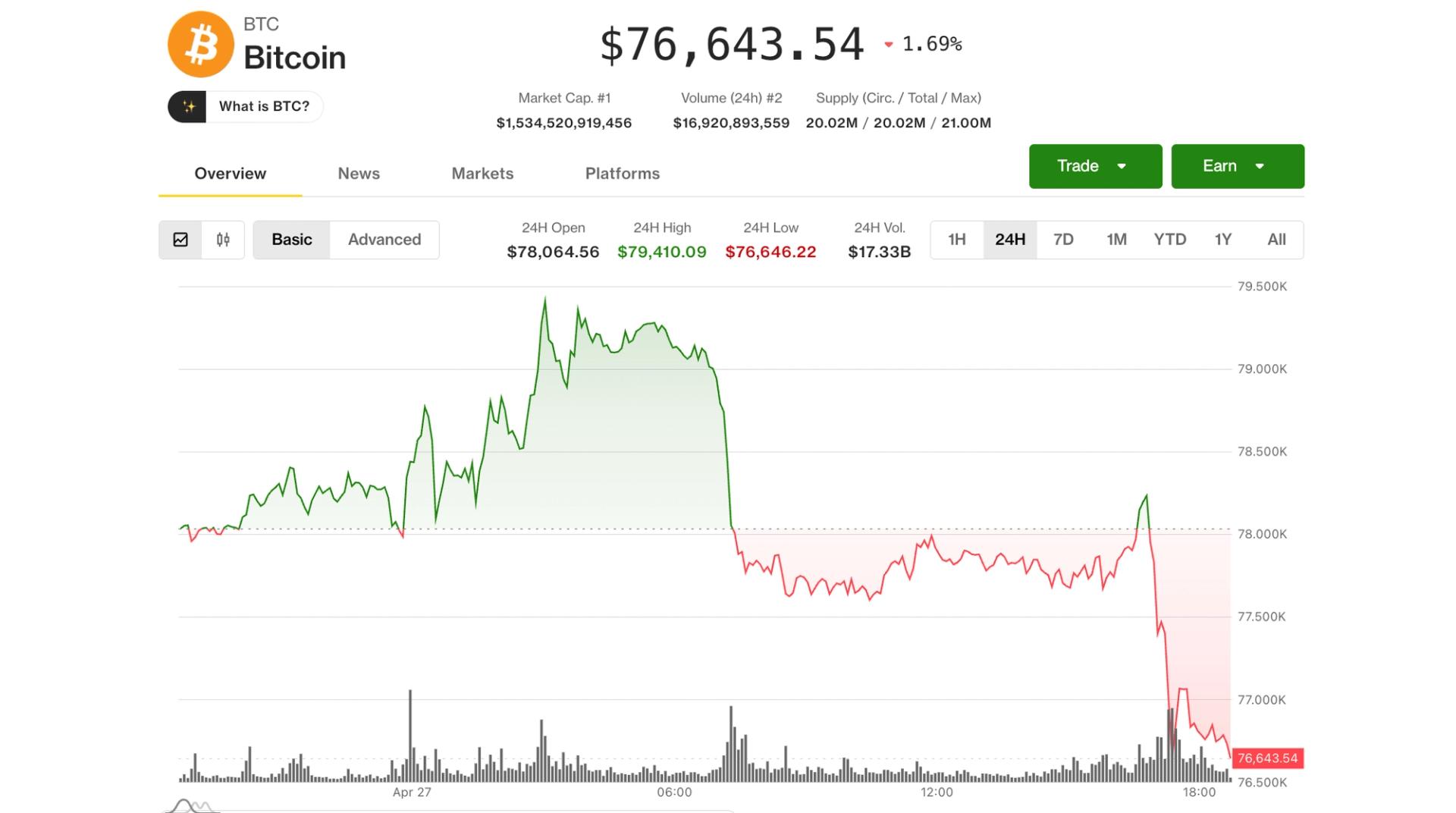
As Bitcoin's price recently dipped to $76,600, key factors such as surging oil prices and geopolitical risks stemming from Iran are complicating the cryptocurrency's rally. Analysts at Bitfinex have pointed out that while short-term holders are cashing out, new demand from ETFs is not sufficiently strong to maintain upward momentum. This creates an intriguing narrative for investors as they navigate the volatile landscape of Bitcoin and its correlation with wider macroeconomic indicators.
Quick Take
| Factor | Impact on Bitcoin Price | Commentary |
|---|---|---|
| Rising Oil Prices | Negative | Inflation concerns could dampen demand. |
| Geopolitical Risks (Iran) | Negative | Heightened uncertainty affects investor confidence. |
| ETF Demand | Positive | Institutional interest remains but lacks momentum. |
| Short-term Profit Taking | Negative | Selling pressure from retail investors. |
The Good
Despite the recent price pullback, the ongoing interest from exchange-traded funds (ETFs) indicates strong institutional support for Bitcoin. The potential for increased liquidity and adoption through these financial products reflects a growing mainstream acceptance of digital assets. Additionally, Bitcoin's decentralized nature offers a hedge against inflation, especially in an environment where rising energy costs could impact traditional fiat currencies. As inflation persists globally, Bitcoin could potentially serve as a safe haven asset, similar to gold, further encouraging long-term investment.
The Bad
However, the negative implications of rising oil prices cannot be overlooked. As oil prices surge, inflation typically follows, leading to increased costs for consumers and businesses alike. This economic strain can lead to reduced discretionary spending, which may impact investments in speculative assets like cryptocurrencies. Additionally, geopolitical tensions, particularly those involving Iran, introduce a layer of uncertainty that could cause investors to retreat to safer assets, further stalling Bitcoin’s price rally.
The Ugly
The ugly side of this situation lies in the behavior of short-term holders. Profit-taking by these investors often creates volatility and can exacerbate price declines. When these traders sell off their holdings to capitalize on gains, it can lead to broader market sell-offs, resulting in price corrections that discourage new investors from entering the market. This cycle of volatility raises questions about Bitcoin’s stability and long-term growth potential in the face of external pressures.
Market Context
The broader economic landscape plays a significant role in Bitcoin's price dynamics. Rising commodity prices, particularly oil, have historically had a direct correlation with inflationary pressures. As central banks globally grapple with interest rate hikes to combat inflation, the impact on Bitcoin’s price could be profound. If inflation continues to rise, it may tighten financial conditions, leading to reduced capital flow into riskier assets like cryptocurrencies.
Simultaneously, the geopolitical climate, especially in the Middle East, can disrupt market sentiment significantly. Any escalation of tensions involving Iran could lead to increased volatility in oil prices, creating a ripple effect that impacts not only traditional markets but also risk assets such as Bitcoin.
Impact on Investors
For investors, the current scenario presents a mixed bag of opportunities and risks. Those looking to invest in Bitcoin should be mindful of the market's volatility and the external factors influencing price movements. The presence of institutional investors through ETFs is a positive sign, but the lack of sustained demand in the face of macroeconomic headwinds is a concern.
Long-term investors may view this pullback as a buying opportunity, especially if they believe in Bitcoin's potential as a hedge against future economic instability. However, caution is warranted in a landscape where rising oil prices and geopolitical tensions may continue to create uncertainty.
Conclusion
In the short term, Bitcoin's ability to navigate the pressures of rising oil prices and geopolitical risks will be critical in determining its trajectory. As the market consolidates below the $80,000 mark, investors must stay informed and consider both the macroeconomic context and Bitcoin’s fundamentals to make educated decisions going forward. With the right strategies, there is potential for Bitcoin to not only recover but thrive, even amidst external challenges.