 Go Back


Analyzing Bitcoin's Retreat to $68,000: A Macroeconomic Perspective
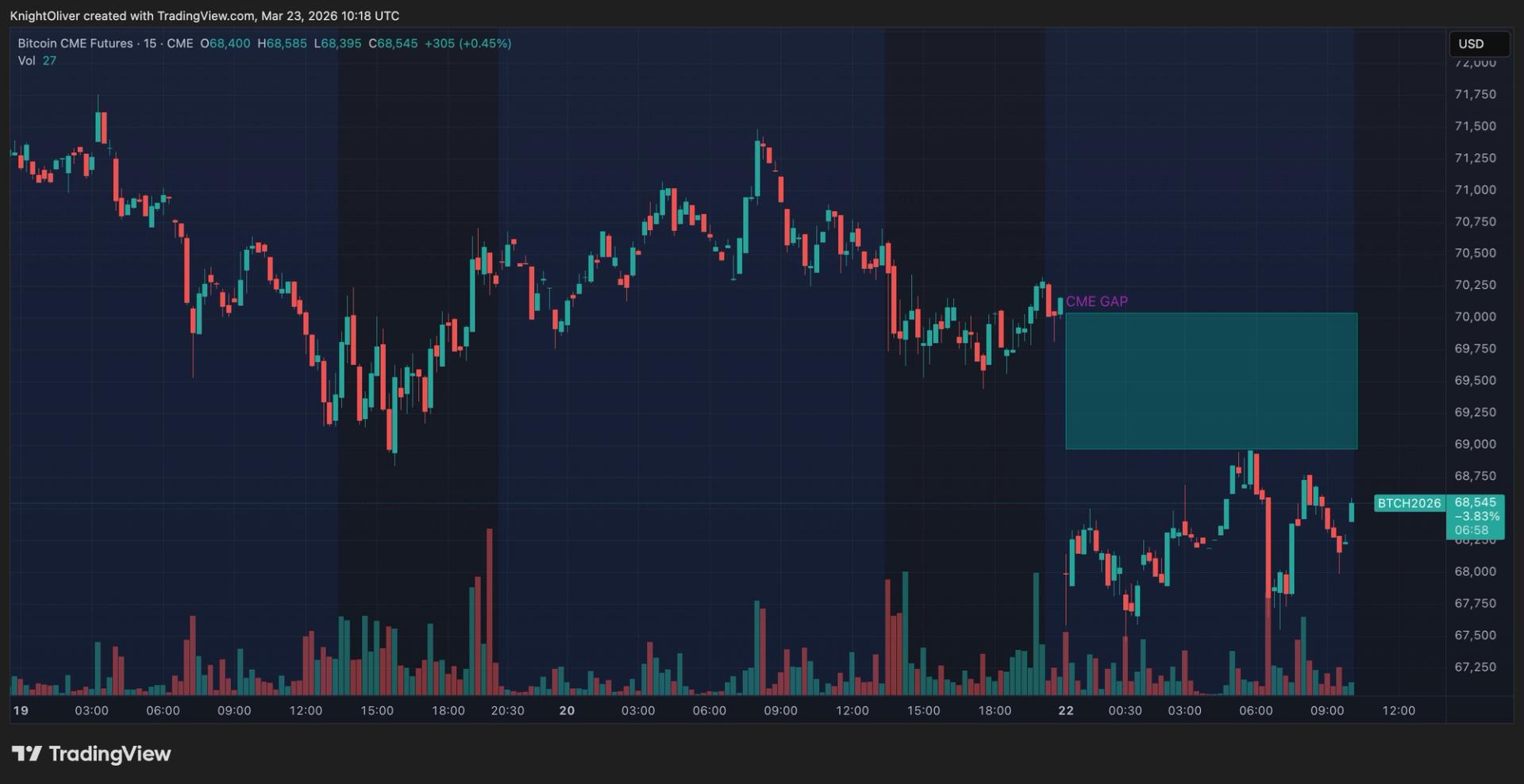
Bitcoin has recently slipped back into February's trading range, settling at approximately $68,000. This noteworthy retreat comes amid heightened geopolitical tensions, particularly following former President Donald Trump's threats to attack Iran's power infrastructure, which ignited a sell-off in risk assets and redirected investor attention toward commodities. This situation opens an opportunity to analyze Bitcoin’s recent movement through a macroeconomic lens, considering potential shifts in market behaviour and investor sentiment.
Quick Take
| Key Point | Details |
|---|---|
| Recent Price Movement | Bitcoin retreated to $68,000 |
| Geopolitical Influences | Donald Trump’s threats regarding Iran |
| Market Reaction | Shift towards commodities, increased volatility |
| Target Price | Traders eyeing a rebound to $70,000 |
Market Context
The cryptocurrency market is closely tied to various macroeconomic indicators and geopolitical situations. In recent weeks, Bitcoin has displayed significant volatility, often responding sharply to global news. The abrupt decline to $68,000 exemplifies how external factors can affect cryptocurrency prices. Amidst fears surrounding international conflict, investors tend to default to more traditional safe-haven assets like gold and silver.
The CME gap, which occurs when Bitcoin’s price significantly diverges from its value over the weekend, has become a focal point for traders. Leaving this gap suggests that there is a potential for Bitcoin to rebound towards $70,000 in the near term, especially if the geopolitical climate stabilizes.
The Role of Geopolitical Events
Geopolitical tensions can have a profound impact on market dynamics. The recent threats from Donald Trump regarding Iran not only affected the stock markets but also instigated a sell-off in cryptocurrencies. Investors are increasingly viewing Bitcoin as a risk asset rather than a safe haven, influencing trading decisions.
When significant political events occur, they can lead to heightened uncertainty and volatility in the market. As traders move towards commodities, Bitcoin could experience decreased demand, at least temporarily. However, if political tensions ease, we may see a swift return of investor interest in Bitcoin, aiming for that $70,000 target.
SWOT Analysis
Strengths
- Decentralization: Bitcoin operates independently of any government or central authority, making it attractive during times of political instability.
- Liquidity: As one of the most traded cryptocurrencies, Bitcoin remains highly liquid, allowing traders to enter or exit positions swiftly.
Weaknesses
- Volatility: Bitcoin is notorious for its price swings, which can deter conservative investors.
- Regulatory Uncertainty: Ongoing regulatory developments could impact future price movements and market stability.
Opportunities
- Institutional Adoption: Increased interest from institutions could provide upward pressure on prices.
- Technological Advancements: Innovations like the Lightning Network might enhance Bitcoin’s utility, encouraging wider adoption.
Threats
- Geopolitical Instability: Continued global tensions may push investors away from cryptocurrencies.
- Market Manipulation: Institutions and whale traders can heavily influence market prices, posing a risk to retail investors.
Impact on Investors
For investors, the retreat to $68,000 presents a mixed bag of opportunities and challenges. While the pullback may discourage some, history shows that Bitcoin often rebounds swiftly after significant dips. The focus on commodities due to geopolitical fears suggests a potential short-term adjustment, but long-term trends may still favour cryptocurrencies as a hedge against inflation and currency devaluation.
As traders eye a rebound towards $70,000, the key will be monitoring external factors, particularly geopolitical developments and macroeconomic indicators. If tensions abate and traditional markets stabilize, Bitcoin could capitalize on the resulting bullish sentiment.
Final Thoughts
The current landscape suggests a pivotal moment for Bitcoin. While the recent drop to $68,000 may seem concerning, it is essential to consider the broader context. Geopolitical events can serve as catalysts for change, and Bitcoin's ability to rebound will depend significantly on market sentiment in the coming weeks. Investors should stay informed and cautious, as the dynamics of the cryptocurrency market continue to evolve in response to global events.