 Go Back


Understanding Bitcoin's Price Stability Amid Market Turmoil
The cryptocurrency landscape is constantly in motion, and Bitcoin often serves as a bellwether for broader market trends. Recent insights suggest that Bitcoin might have already reached a price bottom near $60,000. As implied volatility indicators, such as DVOL and BVIV, point to diminishing fear in the market, it appears that Bitcoin is leading the way as traditional finance grapples with uncertainty. This article delves into the implications of these developments and their potential long-term impacts on investors.
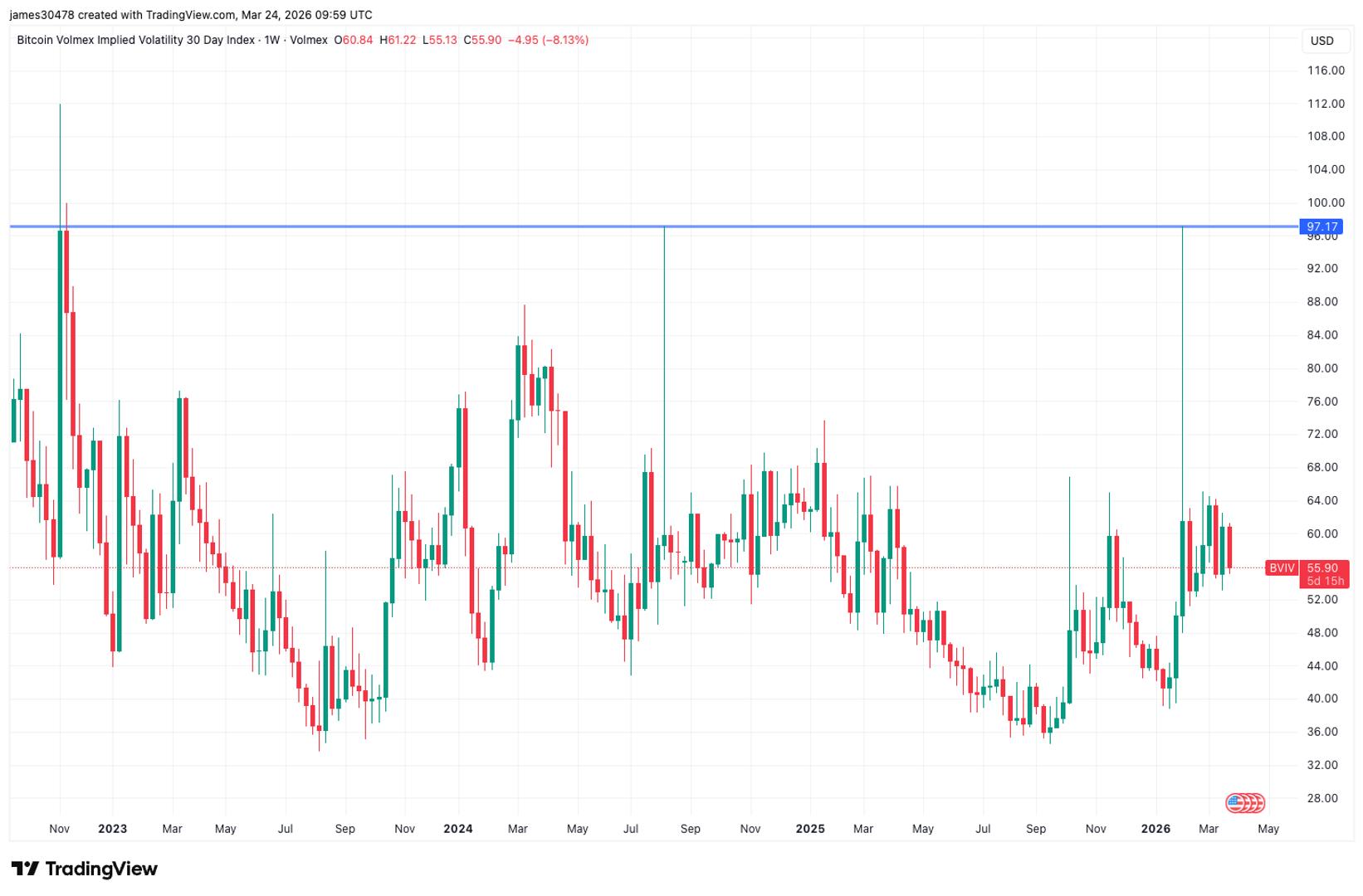
Quick Take
| Indicator | Current Status | Implication |
|---|---|---|
| DVOL (Digital Volatility) | Decreased | Suggests reduced market fear |
| BVIV (Bitcoin Volatility Index) | Near historical lows | Indicates increased stabilization |
| Bitcoin Price | ~ $60,000 | Potential bottom signal |
Market Context
The cryptocurrency market has been known for its high volatility, which often makes it a risky environment for investors. However, as traditional financial markets face their own challenges—such as inflation fears, regulatory uncertainties, and geopolitical tensions—Bitcoin appears to be navigating through these turbulent waters with a degree of resilience.
The Role of Implied Volatility Indicators
Implied volatility measures the market's expectations for future fluctuations in asset prices. In the context of Bitcoin, the Digital Volatility (DVOL) and Bitcoin Volatility Index (BVIV) provide crucial insights into market sentiment. As these indicators show a decline, it suggests that the overwhelming fear which previously dominated investor sentiment may be dissipating. This is particularly significant considering that Bitcoin often acts as a barometer for broader market conditions.
Bitcoin as a Safe Haven?
The behavior of Bitcoin during times of economic stress has led some investors to view it as a potential