 Go Back


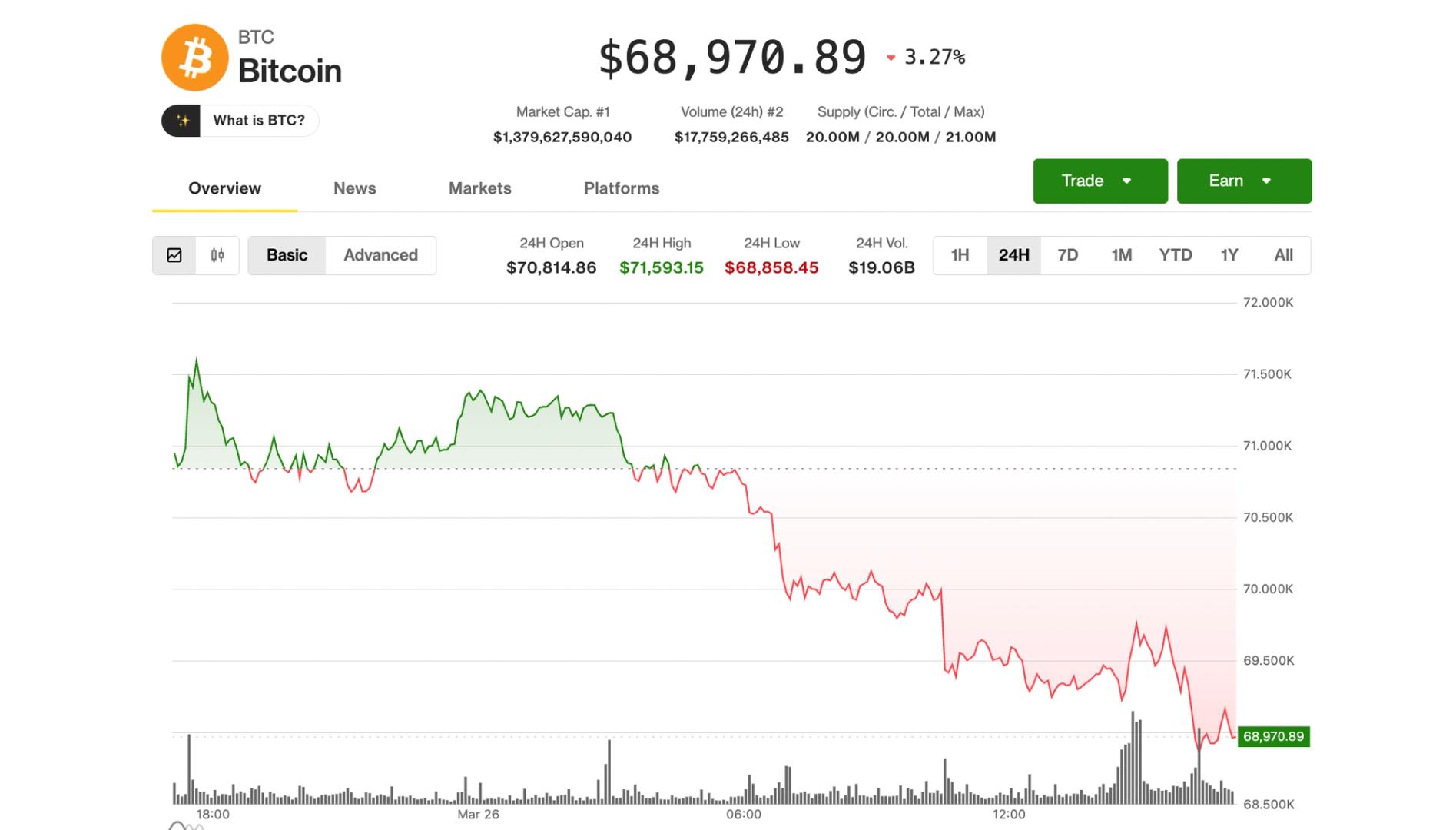
Bitcoin Slips Below $69,000: The Impact of Global Macro Trends
Cryptocurrency markets are inextricably linked to global macroeconomic events, and the recent drop of Bitcoin below $69,000 illustrates this connection. As geopolitical tensions rise and oil prices rebound, analysts warn that these factors will continue to sway market sentiment. This post delves into the implications of such macroeconomic trends on Bitcoin, analyzing potential impacts on investors and market dynamics.
Quick Take
| Factor | Influence on Bitcoin | Market Context |
|---|---|---|
| Geopolitical Tensions | Increased volatility in crypto assets | Oil prices rebounding |
| Oil Market Dynamics | Correlation between oil prices and risk assets | Global market uncertainty |
| Investor Sentiment | Risk aversion due to macro uncertainties | Crypto market reacts to traditional markets |
Market Context
The broader market conditions surrounding Bitcoin's recent price movement cannot be ignored. As the news broke that Bitcoin slipped below $69,000, it was coinciding with a stark rebound in oil prices. The dynamics of oil markets are essential in understanding how Bitcoin and other cryptocurrencies react. Oil prices often signal broader economic health, and rising oil prices can contribute to inflationary pressures, which in turn can lead to increased interest rates. This creates an environment of uncertainty, spurring risk-off behavior among investors.
Additionally, geopolitical tensions, particularly in the Middle East, have repercussions that extend into global markets. As hopes for peace fade, concerns about supply disruptions and economic fallout escalate, leading to increased volatility in financial assets, including cryptocurrencies. In times of uncertainty, Bitcoin has often been viewed as a digital safe-haven or an alternative asset class, but when macroeconomic pressures mount, even this perceived safe-haven can come under pressure.
SWOT Analysis of Bitcoin in Current Market Conditions
Strengths
- Decentralization: Bitcoin's nature as a decentralized currency allows it to operate independently of traditional financial systems.
- Scarcity: With a capped supply of 21 million coins, Bitcoin's value proposition as a scarce asset remains strong.
- Increasing Adoption: Institutional interest in Bitcoin continues to grow, with major corporations and investment funds integrating it into their portfolios.
Weaknesses
- Volatility: Bitcoin's price is highly volatile, making it susceptible to rapid changes influenced by external factors.
- Regulatory Scrutiny: Governments and regulatory bodies are increasingly focused on cryptocurrencies, which can create uncertainty in the market.
- Competition: An array of alternative cryptocurrencies (altcoins) can dilute Bitcoin's dominance in the market.
Opportunities
- Global Economic Instability: Rising inflation and economic instability can drive more investors toward cryptocurrencies as an alternative hedge.
- Technological Advancements: Innovations in blockchain technology could enhance Bitcoin's scalability and utility, attracting more users.
- Financial Inclusion: Bitcoin can serve as a financial tool for the unbanked population across the globe, creating new market opportunities.
Threats
- Macroeconomic Factors: Fluctuations in traditional markets, such as oil and stock markets, can destabilize Bitcoin's price.
- Cybersecurity Risks: The threat of hacks and security breaches continues to loom over the cryptocurrency market.
- Market Manipulation: The relatively low market cap of Bitcoin compared to traditional assets makes it susceptible to market manipulation.
Impact on Investors
For investors, the recent price action of Bitcoin serves as a crucial reminder of the interconnectedness of global markets. The current macroeconomic backdrop creates both challenges and opportunities. While short-term volatility might deter risk-averse investors, those with a long-term perspective might view current prices as a buying opportunity, especially given Bitcoin's historical tendency to rebound after significant downturns.
Moreover, as traditional financial markets react to inflationary pressures and geopolitical instability, Bitcoin's narrative as a hedge against economic turmoil can strengthen. However, investors should remain cautious and consider the broader economic signals before making investment decisions. Monitoring oil market trends, geopolitical developments, and regulatory changes will be key for anyone looking to navigate the current landscape effectively.
Conclusion
The recent decline of Bitcoin below $69,000 is emblematic of the current macroeconomic climate that impacts all risk assets. As oil prices rise and geopolitical tensions persist, Bitcoin's price will continue to be influenced by these external factors. Investors must remain vigilant, understanding that while the macroeconomic environment presents risks, it also harbors potential opportunities for those looking to invest wisely in this evolving digital asset landscape.