 Go Back


Bitcoin and Software Stocks Diverge: What It Means for Crypto
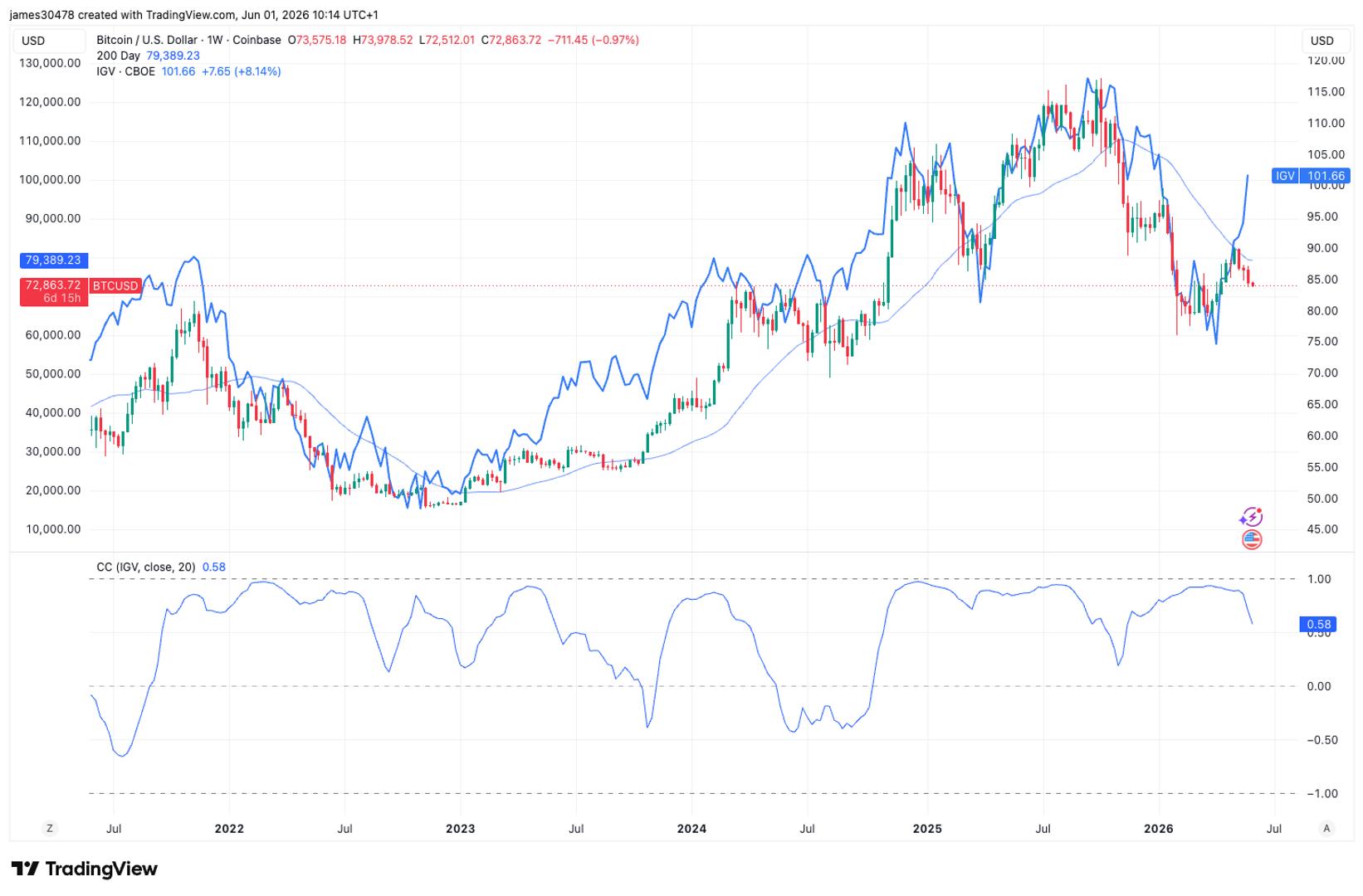
The financial landscape has seen intriguing shifts recently, particularly the marked divergence between Bitcoin and software equities. Historically, these two asset classes have moved in tandem, but recent trends suggest a substantial shift is underway. This divergence raises critical questions about the future trajectory of Bitcoin and its potential recovery in light of a changing macroeconomic environment.
Quick Take
| Aspect | Bitcoin | Software Stocks |
|---|---|---|
| Recent Trend | Diverging | Recovering |
| Historical Context | Often correlated | Cyclical performance |
| Investor Sentiment | Mixed | Generally optimistic |
| Future Predictions | Potential rebound | Continued growth expected |
Historical Context
Bitcoin, often referred to as digital gold, has typically mirrored the performance of technology equities, particularly software stocks, due to their similar risk profiles and investor demographics. This correlation can be attributed to the broader market trends influenced by monetary policy, investor sentiment, and technological advancements. For many years, Bitcoin and software stocks surged together as the tech boom propelled both asset classes.
However, the recent divergence indicates a shift in market dynamics. While software stocks have shown a powerful recovery, Bitcoin has been lagging behind. This change could signal a fundamental shift in how these markets react to external stimuli, such as economic data releases, interest rate adjustments, and overall market sentiment.
Key Drivers of Divergence
Several factors may contribute to this notable separation:
- Market Maturity: Software stocks have found a firmer footing with established business models, leading to investor confidence in their growth potential. In contrast, Bitcoin still grapples with regulatory scrutiny and volatility, which may deter some investors.
- Economic Indicators: Recent macroeconomic data suggests a stronger-than-expected recovery in traditional markets, particularly in the tech sector. This recovery may instigate a flight to quality, benefiting established companies over riskier assets like Bitcoin.
- Investor Behavior: The sentiment surrounding cryptocurrencies has fluctuated dramatically, especially following high-profile regulatory discussions. Many investors may be hesitant to allocate heavily to Bitcoin in light of these uncertainties, contrasting with the generally optimistic outlook for tech stocks.
Market Context
Investors looking at the current state of Bitcoin relative to software stocks must recognize the broader economic environment. The Federal Reserve's monetary policy, inflation rates, and geopolitical tensions continue to impact market dynamics. In this context, Bitcoin's divergence may highlight a critical juncture in its development as an asset class.
- Macroeconomic Impacts: As the economy begins to show signs of recovery, interest rates are likely to rise. Higher rates often dampen risk appetite, leading to declines in speculative asset classes like Bitcoin. Conversely, established companies in the software sector may benefit from increased business investments and consumer spending.
- Future Trajectory of Bitcoin: Despite its current underperformance relative to software stocks, historical trends suggest that Bitcoin may eventually catch up. Speculative booms often follow prolonged periods of divergence with subsequent rebounds driven by renewed investor interest or major technological advancements.
Impact on Investors
The implications of this divergence for investors are substantial. Those invested in Bitcoin may need to reconsider their strategies, weighing the potential for future growth against the current uncertainties. Here are some considerations:
- Long-Term Investment: For long-term investors, Bitcoin's price action may represent a buying opportunity, particularly if it shows signs of recovery against the backdrop of positive macroeconomic developments.
- Diversification Strategies: Given the current market conditions, diversifying portfolios with a mix of established tech equities and Bitcoin could mitigate risk while capturing potential upside.
- Monitoring Trends: Investors should keep an eye on key economic indicators and regulatory developments that could influence Bitcoin's market trajectory in the coming months.
Conclusion
The divergence between Bitcoin and software stocks is a significant development in the cryptocurrency market, fueled by shifting economic conditions and investor sentiment. As the landscape evolves, it's crucial for investors to stay informed and adapt their strategies accordingly. With the potential for a rebound in Bitcoin, coupled with ongoing growth in the tech sector, the future may hold exciting opportunities for both asset classes. Investors must remain vigilant, being prepared to act in response to market shifts as they unfold.