 Go Back


Bitcoin Stagnates at $62,500: Insights into Bearish Trends
In a market characterized by uncertainty, Bitcoin has managed to hold its ground above the pivotal threshold of $62,500, while Ethereum remains near $1,665. However, the overall sluggish price action combined with widening put skews indicates that bearish sentiment is taking hold. The current situation prompts a closer examination of the macroeconomic context surrounding the cryptocurrency market and its long-term implications.
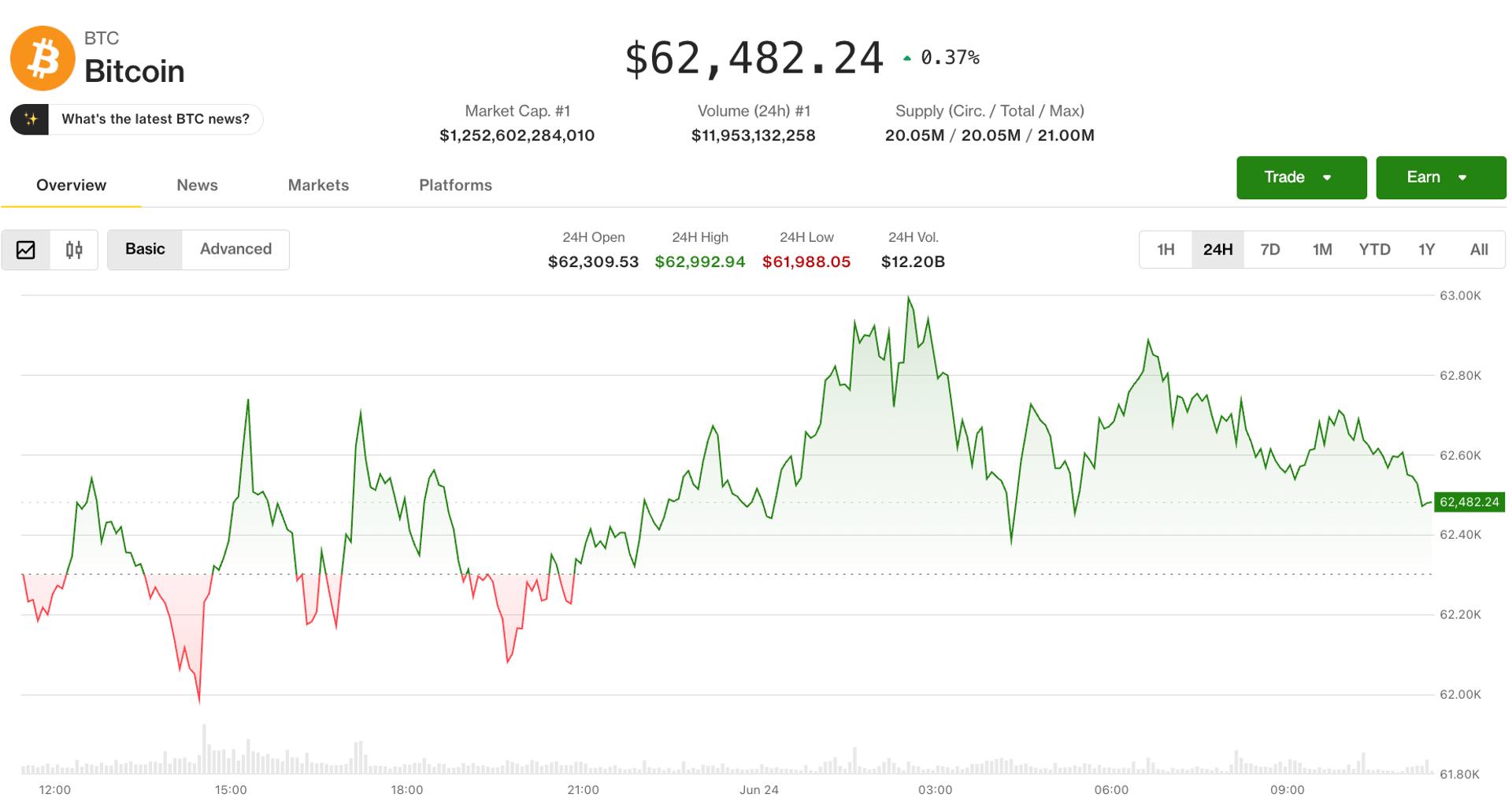
Quick Take
| Metric | Value |
|---|---|
| Bitcoin Price | $62,500 |
| Ethereum Price | $1,665 |
| Market Sentiment | Bearish |
| Put Skew | Widening |
Market Context
The cryptocurrency market is continually influenced by a variety of factors, including macroeconomic conditions, regulatory changes, and investor sentiment. As Bitcoin and Ethereum hover around their current price points, it’s essential to analyze the broader economic backdrop.
Global Economic Influences
The global economy is navigating through a complex landscape post-pandemic, with inflationary pressures and shifting monetary policies. Central banks across the world, particularly the Federal Reserve, have been tightening interest rates to combat rising inflation. This scenario has historically led to a cautious investor sentiment, often causing risk assets like cryptocurrencies to experience heightened volatility.
Moreover, geopolitical tensions and supply chain disruptions further exacerbate the uncertainty in the markets. As traditional assets become riskier, many investors may look to Bitcoin as a digital gold hedge against inflation. However, the current price stagnation suggests that confidence in this narrative is wavering under the weight of bearish market dynamics.
Technological Factors
The technical aspects of Bitcoin and Ethereum also play a vital role in their price movements. The recent sluggishness in price action can be attributed to lower trading volumes and a lack of clear bullish catalysts. Furthermore, the increasing adoption of Layer 2 solutions and competing blockchain technologies could be siphoning off potential investment away from these leading cryptocurrencies.
SWOT Analysis
Strengths
- Brand Recognition: Bitcoin remains the most recognized cryptocurrency, serving as a digital store of value.
- Network Security: Strong hash rate and decentralized nature make Bitcoin robust against attacks.
Weaknesses
- Scalability Issues: Bitcoin's transaction speed and costs can hinder its mass adoption as a payment method.
- Market Dependency: Heavy reliance on broader economic trends leaves Bitcoin vulnerable to external shocks.
Opportunities
- Institutional Investment: Increased interest from institutional investors could bolster prices.
- Global Adoption: Expanding acceptance of cryptocurrencies for transactions could drive demand.
Threats
- Regulatory Scrutiny: Growing regulatory concerns could negatively impact market sentiment.
- Technological Competition: Emerging cryptocurrencies may offer better utility and scalability, drawing investors away from Bitcoin.
Impact on Investors
The current bearish trend raises significant implications for both short-term traders and long-term investors. For traders, the widening put skews signal a growing sentiment for downside protection. This could lead to more volatility as traders hedge their positions in anticipation of further downturns.
For long-term investors, the current stagnation could present a buying opportunity if they believe in the fundamentals of Bitcoin as a store of value. However, it is crucial for them to remain cautious and monitor macroeconomic indicators closely, understanding that the landscape can shift rapidly.
Strategies for Investors
- Diversification: Spreading investments across various assets can mitigate risks associated with market volatility.
- Dollar-Cost Averaging: This strategy involves regularly investing a fixed amount in Bitcoin, which can help smooth out purchase prices over time.
- Staying Informed: Keep abreast of macroeconomic conditions and regulatory developments that could impact market sentiment.
Conclusion
The current scenario, where Bitcoin is clinging to $62,500 amid bearish pressures, reflects the intricate interplay between macroeconomic variables and investor sentiment. As the market navigates through these turbulent waters, the long-term outlook will depend significantly on how external economic factors evolve and how adaptive the cryptocurrency ecosystem can be. Investors are advised to stay vigilant and aware of the changing landscape, as opportunities and threats continue to emerge in the crypto marketplace.
Tags
- Bitcoin
- Crypto Market
- Bearish Trends
- Ethereum
- Market Analysis