 Go Back


Bitcoin Struggles Below $80,000 Amid Inflation Fears
The cryptocurrency market has recently faced a significant downturn as inflation concerns reverberate through the global economy. Bitcoin is currently struggling to break the $80,000 barrier, with leveraged long positions being unwound and altcoins experiencing a notable decline. This blog post explores the underlying factors driving these market trends and what it could mean for investors going forward.
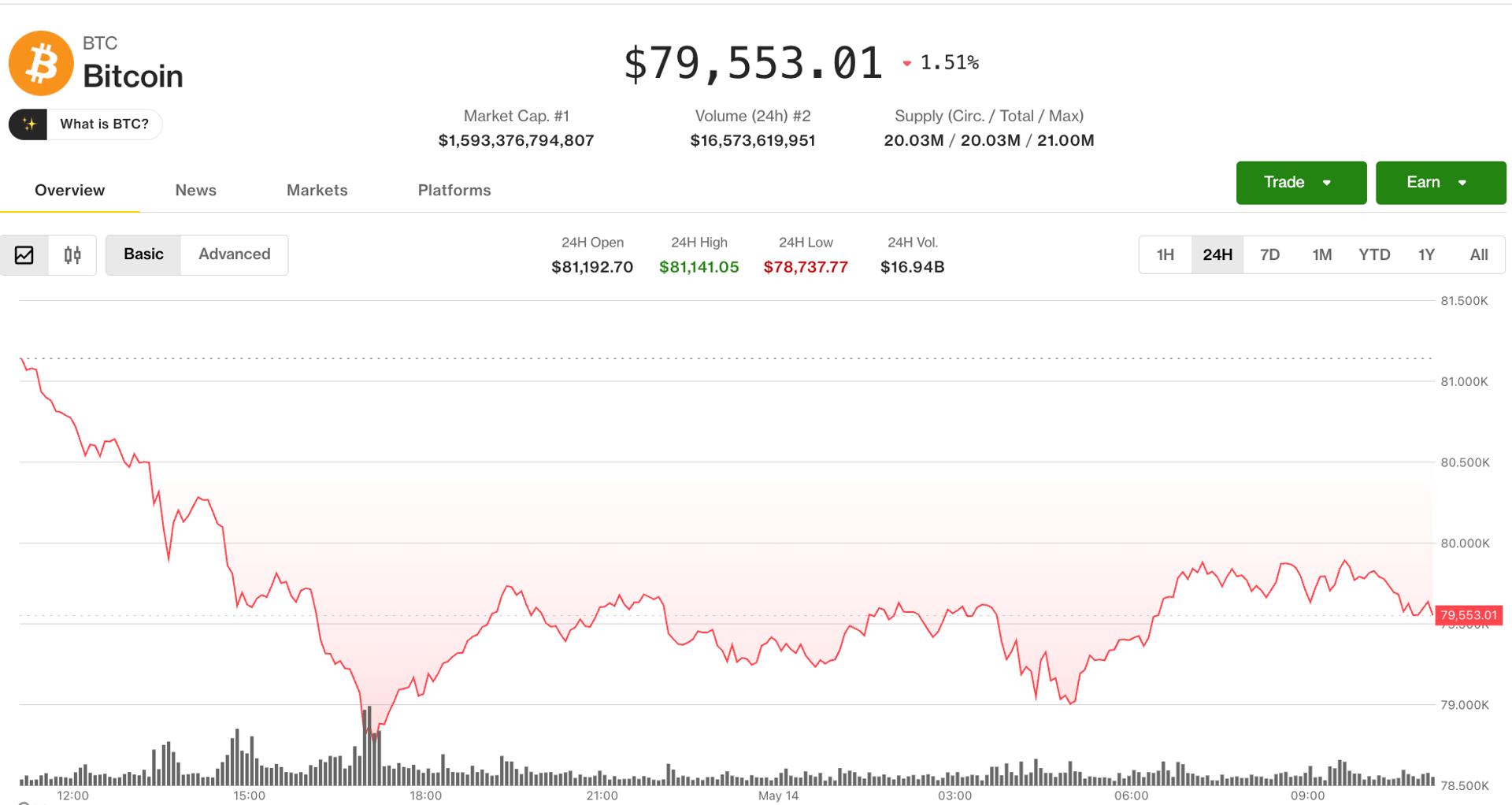
Quick Take
| Aspect | Current Status |
|---|---|
| Bitcoin Price | Below $80,000 |
| Market Sentiment | Bearish |
| Leveraged Positions | Unwinding |
| Altcoin Performance | Declining |
What Are the Current Challenges in the Crypto Market?
Inflation concerns are having a profound impact on risk assets, including cryptocurrencies. The recent sell-off was triggered by a wave of long liquidations as traders reacted to macroeconomic data signaling a rise in inflation rates. This situation has led to a negative sentiment in the market, causing Bitcoin to hover below the crucial psychological level of $80,000 and dragging altcoins down with it.
Market Context
Historically, Bitcoin has been viewed as a hedge against inflation, attracting investors during periods of economic uncertainty. However, the current scenario presents a unique challenge. With inflation fears escalating, institutional and retail investors alike are re-evaluating their investment strategies. As global central banks, including the Federal Reserve, respond to rising prices with tighter monetary policies, the resulting increase in interest rates can undermine the appeal of non-yielding assets like Bitcoin.
The recent trend of unwinding leveraged long positions further exacerbates the situation. Traders who had bet on Bitcoin's price climbing have been forced to liquidate their positions as the market turned against them. This unwinding process creates a cascading effect, leading to further price drops and heightened volatility. In this environment, altcoins, often seen as higher-risk investments, are experiencing an even sharper decline.
What Impact Does This Have on Investors?
For investors, the current market conditions present a double-edged sword. On one hand, the price decline may offer buying opportunities for those looking to accumulate Bitcoin and other cryptocurrencies at lower prices. On the other hand, the risk of further declines looms large, particularly if economic indicators continue to point toward persistent inflation.
Short-Term vs. Long-Term Strategy
- Short-Term Traders: Those focused on short-term gains may find the current volatility challenging. Rapid price movements can lead to significant losses, especially among altcoins, which tend to amplify Bitcoin's price action.
- Long-Term Holders: Investors with a long-term perspective may view the price drop as a chance to increase their holdings. Historically, Bitcoin has shown resilience, and past downturns have often preceded bullish trends.
What Are Future Predictions for Bitcoin and Altcoins?
Looking ahead, several factors will influence the trajectory of Bitcoin and the overall crypto market. Analysts remain divided on the future price of Bitcoin, with some projecting a rebound above $100,000 by the end of 2026, while others caution that prolonged inflationary pressures may keep prices suppressed.
Key Influencers to Watch
- Inflation Data: Continued high inflation rates could lead to more stringent monetary policies, negatively impacting cryptocurrencies.
- Regulatory Developments: Changes in how cryptocurrencies are regulated could significantly affect investor sentiment and market dynamics.
- Adoption Rates: Increased adoption of Bitcoin and blockchain technology could drive demand, assisting in price recovery.
- Technological Advances: Innovations within the blockchain space, such as improvements in transaction speeds and security, could bolster confidence in the market.
Conclusion
The current crypto market scenario is undoubtedly challenging, particularly for Bitcoin and altcoins amid rising inflation fears. Investors must navigate these turbulent waters with care, balancing short-term risks with long-term opportunities. As the macroeconomic landscape evolves, staying informed and adaptable will be key in making strategic decisions within this dynamic market.
Tags
- Bitcoin
- Altcoins
- Inflation
- Market Analysis
- Crypto Trading