 Go Back


Bitcoin Stumbles Below $80K: Macro Signals Shift Market Sentiment
The cryptocurrency market is currently experiencing a wave of caution as Bitcoin has seen a significant drop after repeatedly failing to breach the psychological barrier of $80,000. This downturn is not only impacting Bitcoin but also dragging other major cryptocurrencies like Ethereum along with it. As traders recalibrate their risk appetite, macroeconomic signals are coming into sharper focus, suggesting a broader shift in market dynamics.
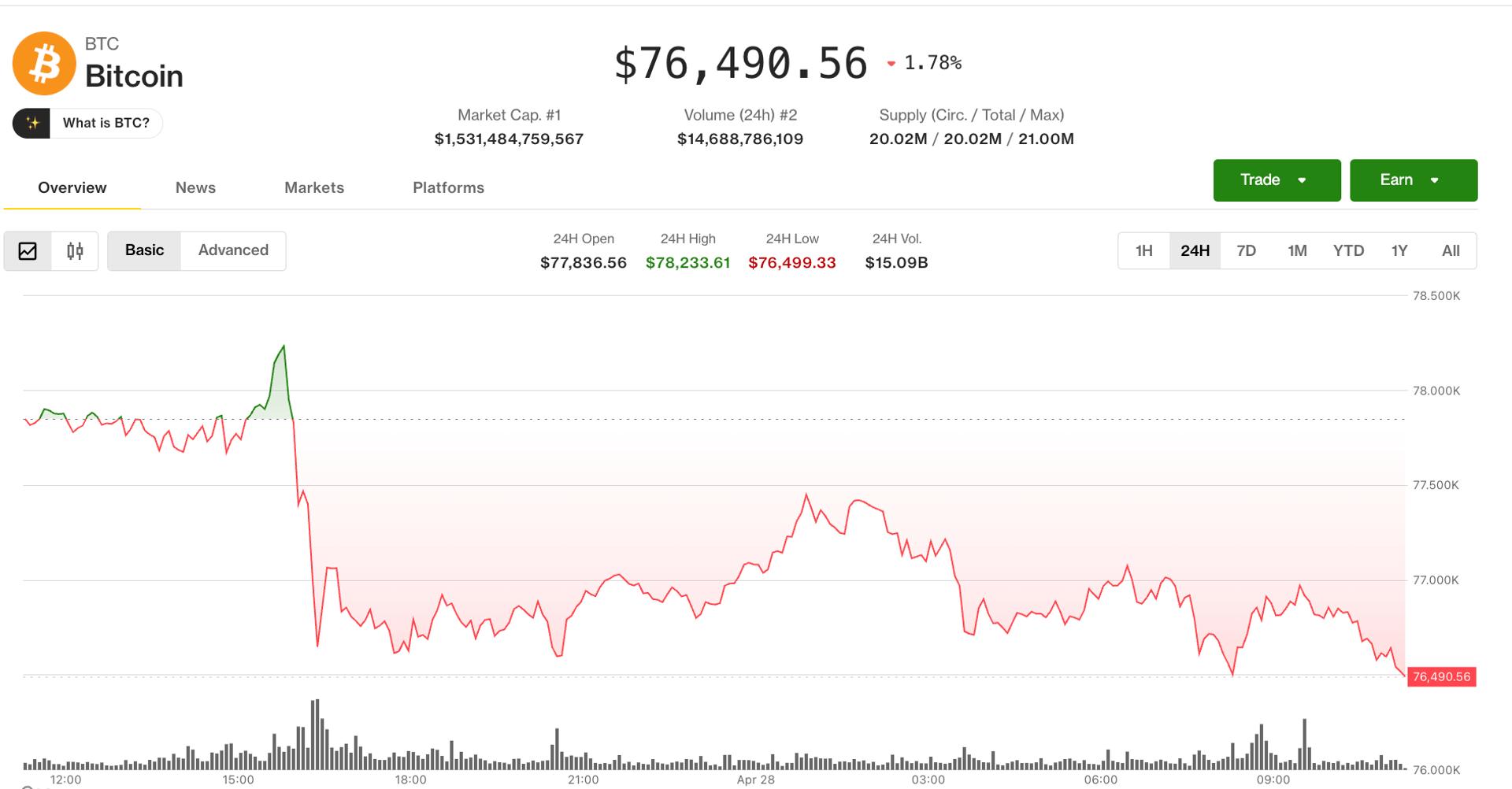
Quick Take
| Aspect | Details |
|---|---|
| Current Bitcoin Price | Below $80,000 |
| Recent Performance | Decline after resistance at $80,000 |
| Impact on Ethereum | Significant downturn |
| Market Sentiment | Cautious, reduced risk appetite |
| Volatility | Subdued |
The Good: Understanding the Market Context
Bitcoin's recent struggle below the $80,000 level highlights a critical point in its market lifecycle. On one hand, the psychological significance of this price point cannot be understated. Traders often use such levels as benchmarks to gauge momentum. When Bitcoin failed to maintain its position above this threshold, it triggered a wave of selling, indicating a sentiment shift among investors.
Historically, price resistance levels play a significant role in technical analysis. For instance, previous cycles have shown that once a major resistance is established, repeated failures to break through can lead to a correction, as traders look to minimize losses. This is evident in the current market, as the combination of technical analysis and macroeconomic factors leads to a cautious approach.
Additionally, the lower volatility observed in recent weeks suggests that traders are adopting a more conservative stance. This reduction in volatility could be seen as a protective measure against potential adverse macroeconomic developments, such as inflationary pressures or regulatory uncertainties that could impact the broader financial environment.
The Bad: Implications of Reduced Risk Appetite
The caution observed in the current trading environment is not without its pitfalls. A reduced risk appetite can stifle potential innovation and market growth. Many traders, particularly institutional investors, are increasingly concerned about the implications of rising interest rates and tightening monetary policy from central banks worldwide. These macroeconomic factors could contribute to a more challenging environment for riskier assets like cryptocurrencies.
Moreover, as Bitcoin and Ethereum are considered bellwethers for the crypto market, their downturn can have a cascading effect on altcoins and emerging projects. When confidence wanes in these leading assets, it could hinder capital flows into the market, potentially stalling the development of innovative blockchain projects and decentralized applications (dApps) that rely on a thriving ecosystem.
The Ugly: A Bearish Outlook?
While the current bearish sentiment could be temporary, there are underlying concerns that may indicate a more prolonged downturn. The subdued volatility in the market suggests a lack of bullish momentum, which can lead to a prolonged period of stagnation. Furthermore, if macroeconomic conditions do not improve or if regulatory environments tighten further, it may exacerbate the risk-off sentiment among investors.
This cautious environment raises questions about the long-term viability of current price levels and whether Bitcoin can reclaim its upward trend. If the current dynamics persist, we may see a further correction or a prolonged consolidation phase in the market, leading to increased volatility in the future as traders react to changing signals.
Market Context
The interplay between macroeconomic trends and cryptocurrency valuations is becoming increasingly clear. In times of economic uncertainty, assets considered safe havens—such as gold or treasuries—often outperform. In contrast, riskier assets, including cryptocurrencies, may exhibit heightened volatility as investors flee for safety. Recent reports indicate that traders are closely monitoring macroeconomic indicators, including inflation rates and central bank policies, which could influence their decision-making.
As the crypto market navigates these complexities, it’s essential for investors to remain informed about both technical indicators and macroeconomic trends. A deeper understanding of these elements will equip traders to make informed decisions in an ever-evolving landscape.
Impact on Investors
For investors, the current market climate presents both challenges and opportunities. Those who have entered the market during the recent bull run may feel the pressure of a declining asset. However, this downturn also provides an opportunity for strategic accumulation at lower price points. Long-term holders may view the current resistance as a healthy correction, allowing the market to reset before embarking on another upward trajectory.
In conclusion, while the immediate outlook may appear bleak, the cryptocurrency market is characterized by its cyclical nature. Historical analysis shows that periods of consolidation often precede significant growth phases. Investors should remain vigilant and be prepared to adapt their strategies as the market evolves and responds to macroeconomic shifts.
In the fast-paced world of cryptocurrencies, knowledge is power. Keeping an eye on macroeconomic developments and their impact on market sentiment will be crucial in navigating the uncertainties ahead.
Tags
- Bitcoin
- Ethereum
- Cryptocurrency
- Market Trends
- Risk Appetite
- Macroeconomics