 Go Back


Bitcoin Surges Past $77,000 Amid Oil Price Drop and Market Optimism
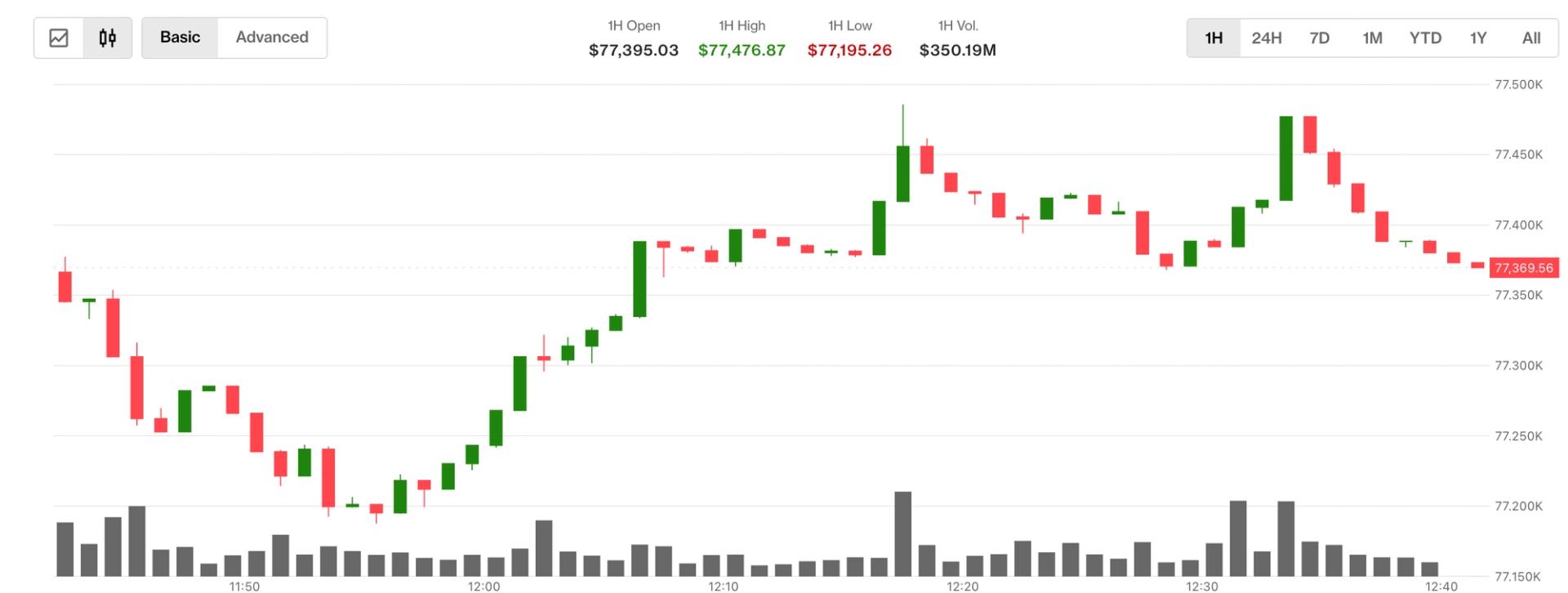
The cryptocurrency market is once again in the spotlight as Bitcoin has recently surged above the $77,000 mark. This notable increase has been attributed to a significant 5% drop in oil prices, driven by the potential reopening of the Strait of Hormuz, a vital shipping route for global oil. This blog post will delve into the macroeconomic context surrounding this phenomenon, the implications for investors, and what this could mean for the long-term trajectory of Bitcoin.
Quick Take
| Event | Impact |
|---|---|
| Oil Price Drop | Supported Asian equities |
| Bitcoin Price Surge | Increased market sentiment |
| Strait of Hormuz Reopening | Potential geopolitical stability |
What Factors Are Driving Bitcoin's Surge?
The Oil Price Dynamics
The correlation between oil prices and Bitcoin is more pronounced than many may realize. Oil serves as a critical benchmark for the global economy, and fluctuations can influence investor sentiment across multiple asset classes, including cryptocurrencies. The recent 5% drop in oil prices indicates potential easing in geopolitical tensions, particularly with respect to the Strait of Hormuz. A stable oil supply can lead to increased investor confidence, not just in equities but in digital currencies as well.
Asian Equities Response
The sharp decline in oil prices has also positively impacted Asian equities. Investors often react to oil price changes by reallocating their portfolios to balance risk. With Asian markets responding favorably, the ripple effect has been felt across the cryptocurrency space, bolstering Bitcoin’s upward momentum. This interconnectedness of asset classes highlights the importance of monitoring macroeconomic indicators for crypto investors.
Market Context
Historical Correlation Between Oil and Bitcoin
Historically, Bitcoin and oil have exhibited an inverse correlation in significant market scenarios. When oil prices rise, indicating potential inflationary pressures, risk assets like Bitcoin often face downward pressure as investors seek safer havens. Conversely, a decline in oil prices tends to suggest a more stable economic environment, encouraging risk-taking behavior among investors.
This recent spike in Bitcoin's price amidst a backdrop of declining oil prices can be seen as part of a broader trend where macroeconomic stability leads to increased investment in cryptocurrencies. In essence, Bitcoin is often viewed not just as a currency but as a hedge against economic instability, which can be exacerbated by rising oil prices.
Global Economic Indicators
In addition to oil prices, other global economic indicators such as inflation rates, employment data, and central bank policies play a significant role in shaping investor sentiment towards Bitcoin. For instance, if inflation remains subdued and employment figures improve, the likelihood of increased investment in Bitcoin rises significantly.
Impact on Investors
Short-Term vs. Long-Term Perspectives
For short-term investors, the current environment presents a window of opportunity to capitalize on Bitcoin's rise. However, it is crucial to remain cautious as the markets can be volatile, particularly as geopolitical factors can change rapidly.
In the long term, the relationship between oil prices and Bitcoin may evolve as more institutional investors enter the cryptocurrency market. If Bitcoin continues to be seen as a legitimate asset class, shifts in oil prices may increasingly influence Bitcoin's price trajectory, much like traditional market dynamics.
Risk Management Strategies
Given the current market conditions, investors should consider employing diversified investment strategies to mitigate risks associated with geopolitical tensions affecting oil supply. This could include holding a mix of traditional equities and cryptocurrencies, enabling a balanced approach to market fluctuations.
Conclusion
The interplay between oil prices and Bitcoin's valuation reflects broader economic trends that investors must heed. As Bitcoin trades above $77,000 in the wake of falling oil prices, the sentiment within the market appears optimistic. However, long-term investors should remain vigilant and aware of the potential volatility stemming from geopolitical and economic shifts.
Ultimately, understanding the macroeconomic context and its impact on Bitcoin and other cryptocurrencies will be critical for making informed investment decisions moving forward.