 Go Back

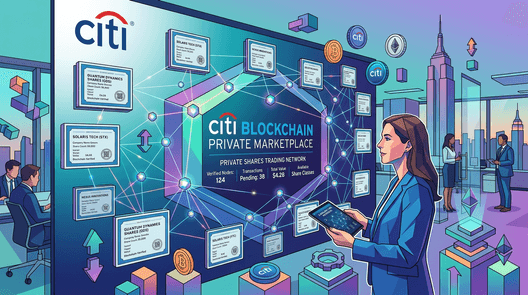
Citi's Blockchain Marketplace: A New Era for Private Company Shares
In a groundbreaking move, Citi has launched a blockchain marketplace that will allow for the trading of tokenized depositary receipts representing shares of private companies. This innovative step by one of the largest banking institutions in the U.S. comes amid a growing trend on Wall Street to embrace tokenized assets, reflecting a shift in how traditional finance interacts with emerging technologies.

Quick Take
| Key Points | Details |
|---|---|
| Institution | Citi Investments |
| Marketplace Type | Blockchain-based, focused on private companies |
| Asset Type | Tokenized depositary receipts |
| Industry Trend | Increasing adoption of tokenized assets |
| Global Context | Growth in digital asset regulations |
Market Context
Citi’s launch of a blockchain marketplace comes at a pivotal moment for both the banking sector and the cryptocurrency market. As traditional financial institutions begin to embrace blockchain technology, the lines between conventional finance and digital assets continue to blur. This initiative aligns with recent trends where major financial players are exploring the integration of blockchain solutions to enhance efficiency, transparency, and security in transactions.
- Increased Interest in Tokenization: The movement towards tokenizing assets is gaining momentum. By converting traditional financial instruments into digital tokens, companies can enhance liquidity and access to capital markets, especially for private companies that traditionally face barriers to entry for retail investors.
- Regulatory Developments: The regulatory landscape surrounding cryptocurrency and tokenized assets is evolving. As more financial institutions enter this space, regulatory bodies are under pressure to create comprehensive frameworks that can accommodate these innovations while protecting investors.
- Adoption of DeFi Principles: The decentralized finance (DeFi) movement has influenced institutional players, prompting them to consider how blockchain can be leveraged for improved operational efficiency. Citi's blockchain marketplace exemplifies this shift, making private equity more accessible and transparent.
Impact on Investors
The introduction of a blockchain marketplace for private company shares can have significant implications for investors:
Access to Private Markets
- Enhanced Accessibility: Previously, investing in private companies was typically limited to accredited investors. Tokenization could democratize access, allowing smaller investors to buy fractional shares.
- Diversification Opportunities: With an array of private companies available on the blockchain, investors can diversify their portfolios beyond the constraints of public markets.
Increased Liquidity
- Tokenized Trading: The ability to trade tokenized depositary receipts could lead to increased liquidity in private equity investments, which have historically been known for their long holding periods.
- Market Dynamics: As liquidity increases, market dynamics may shift, potentially leading to more accurate pricing of private assets based on real-time supply and demand.
Regulatory Considerations
- Investor Protection: With the launch of such platforms, there will be a heightened need for robust investor protection mechanisms to ensure transparency and mitigate risks associated with fraud or misrepresentation.
- Compliance Requirements: As regulations evolve, investors must remain informed about compliance requirements related to investing in tokenized assets, ensuring they adhere to all necessary guidelines.
Conclusion: A Game-Changer in Finance
Citi's blockchain marketplace marks a significant development in the financial services industry, especially concerning private equity investments. As tokenization gains traction, it’s clear that we are witnessing the early stages of a transformative process that could redefine how investors access and trade private assets.
The implications for both institutional and retail investors are profound, with increased access, liquidity, and the potential for enhanced portfolio diversification. However, as with any financial innovation, the path forward will necessitate careful navigation of regulatory landscapes and investor protection concerns.
As we continue to monitor these developments, it is essential for investors to stay informed and prepared for the new opportunities that tokenized assets present in the ever-evolving financial landscape.