 Go Back

Exploring the Economic Impact of AI Innovations Like Stitch
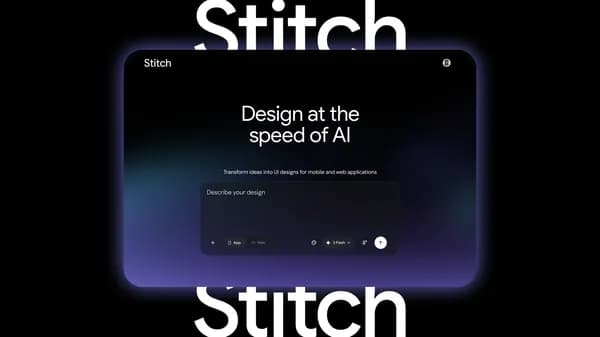
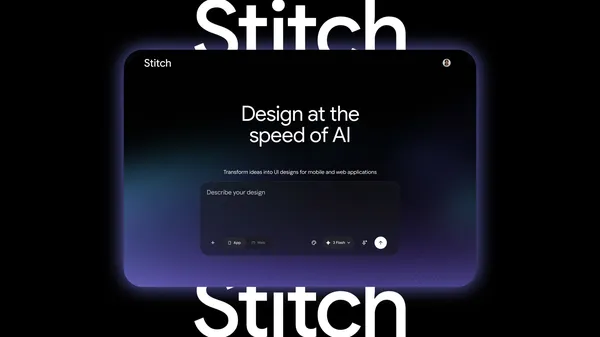
Artificial intelligence (AI) continues to revolutionize various sectors, and recent announcements regarding Google's new design tool, Stitch, highlight the growing fusion of technology and collaborative creativity. This innovative tool allows designers to work in real-time with AI, fundamentally altering the design process and its implications for the economy and workforce.
Quick Take
| Feature | Description |
|---|---|
| Real-time Collaboration | Enables live interaction between designers and AI agents. |
| Enhanced Creativity | Streamlines creativity, allowing for rapid iteration. |
| Market Impact | Potential shifts in design job roles and skills. |
| Economic Influence | Could reduce costs for businesses, impacting pricing strategies. |
The Good: Advancements in Design and Productivity
The introduction of Stitch is an exciting development in the realm of AI. By enabling real-time collaboration between human designers and AI, it enhances productivity and fosters creativity. Designers can iterate on ideas almost instantaneously, receiving immediate feedback from the AI, which can analyze vast datasets to suggest improvements or alternatives. This dynamic interaction not only accelerates the design process but also results in more innovative outcomes.
Moreover, businesses can leverage such tools to cut down on the time and cost associated with design projects. For smaller companies and startups, this could mean a significant reduction in overhead costs, allowing them to compete more effectively against larger corporations. The potential for increased productivity could lead to higher economic output as industries adapt to incorporate such transformative technologies.
The Bad: Job Displacement and Skills Gap
However, the rise of AI tools like Stitch raises important concerns regarding job displacement and the evolving skills required in the workforce. As AI takes on more design tasks, roles traditionally held by human designers may become less relevant, leading to potential job losses. Employees in the creative sector may find themselves needing to adapt quickly to remain competitive, necessitating a shift in educational and training programs.
Additionally, there is a risk that reliance on AI could stifle creativity over time. If designers become overly dependent on AI for idea generation and decision-making, there might be a decline in original thought and innovation. The challenge lies in finding the right balance between leveraging AI's capabilities while maintaining the human touch that is crucial in design and creativity.
The Ugly: Economic Inequality and Access Issues
The integration of advanced AI tools into the design process could exacerbate economic inequality. Larger firms with greater resources will inevitably be able to afford these technologies and employ experts to maximize their potential. In contrast, smaller firms or independent designers may struggle to keep up, resulting in a widening gap between those who can leverage AI effectively and those who cannot.
Moreover, if access to AI technologies becomes a privilege of wealthier companies, it could lead to a homogenization of design where only a few dominant players dictate trends and styles. This disparity raises critical questions about market fairness and the sustainability of small businesses within the creative sector.
Market Context
The launch of innovative AI tools like Stitch comes at a time when the global economy is increasingly digital and interconnected. As industries lean into digital transformation, the shift toward real-time collaboration facilitated by AI can be seen as part of a broader trend toward efficiency and agile practices. Companies are recognizing that speed and adaptability are crucial for survival in an ever-changing marketplace.
The design sector has been particularly ripe for disruption, with traditional processes often viewed as slow and cumbersome. By streamlining design workflows, tools like Stitch can enable companies to respond more rapidly to consumer demands and market shifts, which is vital for sustaining competitive advantage.
Impact on Investors
For investors, the rise of AI in design presents both challenges and opportunities. Firms that successfully adopt and integrate AI tools into their workflows may see significant returns on investment, particularly if they can capitalize on increased efficiency and reduced costs. However, investors must also be mindful of the potential risks associated with job displacement and economic inequality. Companies failing to adapt may struggle, and those that do not prioritize ethical considerations in AI implementation may face backlash from consumers and regulators alike.
In summary, while innovations like Google’s Stitch offer promising advances in design processes and productivity, they also come with a multifaceted array of implications for the economy and the workforce. Stakeholders must carefully navigate the landscape to harness the benefits while mitigating the risks associated with this transformative technology.