 Go Back

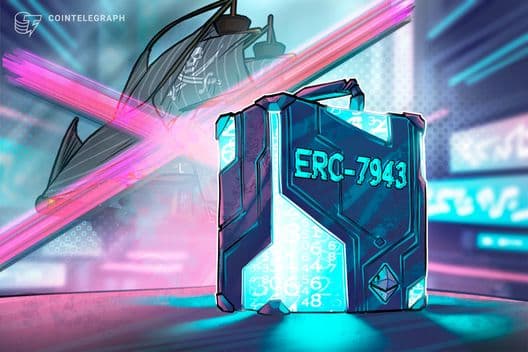
ERC-7943: Rethinking Institutional Finance in DeFi
In a pivotal moment for decentralized finance (DeFi), the ERC-7943 standard is approaching its final stage of development. This standard, championed by Ethereum builders, aims to establish a more robust framework for integrating real-world assets (RWAs) into the DeFi ecosystem. The author of ERC-7943 highlights a critical concern: institutions cannot effectively engage in what he describes as DeFi’s ‘pirate game.’ This perspective challenges the existing narrative surrounding institutional participation in decentralized networks.

Quick Take
| Aspect | Details |
|---|---|
| Standard | ERC-7943 |
| Focus | Real-World Asset (RWA) Integration |
| Current Stage | Final Development Phase |
| Key Concern | Institutional Engagement in DeFi |
| Implication | Potential barriers to entry for traditional finance firms |
Understanding ERC-7943 and Its Significance
The ERC-7943 standard is fundamental to the evolution of DeFi as it seeks to address the complexities of integrating RWAs. The need for such a standard arises from the increasing interest among institutional investors in DeFi products. However, the existing protocols and systems often resemble a ‘pirate game,’ where players operate in a volatile and unpredictable environment. This characterization reflects the challenges that institutions face when considering participation in a space traditionally dominated by retail investors.
The Challenge of Institutional Participation
Institutions often operate under stringent regulatory frameworks, which can clash with the decentralized and often unregulated nature of DeFi. The author of ERC-7943 emphasizes that institutions require a certain level of structure and security, which is often absent in current DeFi projects. This inconsistency raises significant concerns about risk management, compliance, and governance for institutional players looking to enter the market. Notably, the author argues that without a robust framework, institutions may be deterred from entering the DeFi space altogether.
Market Context
The DeFi landscape has witnessed exponential growth over the past few years, with billions locked in various protocols. However, as the market continues to mature, the focus is shifting from mere speculation to the introduction of institutional-grade products. The rise of RWAs in DeFi signifies a critical transition point where traditional assets can be tokenized, allowing for liquidity and new financial instruments. This trend is crucial as it blurs the lines between traditional finance and DeFi, creating a hybrid landscape that relies on effective regulation and compliance.
Historical Background
The inception of DeFi can be traced back to Ethereum’s programmable smart contracts, which allowed developers to create complex financial applications without intermediaries. However, as the market grew, so did the need for standards that could guide the integration of real-world assets. The establishment of ERC-7943 represents a crucial step toward addressing these needs, providing a framework that aligns with institutional expectations while maintaining the core principles of decentralization.
Impact on Investors
The introduction of ERC-7943 is poised to have profound implications for investors, particularly those representing institutional interests. For retail investors, this standard could lead to enhanced product offerings that are compliant with regulatory expectations. However, it also raises questions about potential market dynamics, such as liquidity and price stability, as institutional players enter the fray.
Key Implications for Retail Investors
- Greater Product Variety: As institutional interest grows, new financial products that cater to both retail and institutional investors are likely to emerge, enhancing market dynamism.
- Potential Price Volatility: An influx of institutional capital could lead to increased volatility, particularly for smaller DeFi projects that may not withstand large-scale trades.
- Increased Regulatory Scrutiny: As institutions step into DeFi, there may be heightened regulatory oversight, which could impact how projects operate and evolve.
Conclusion
The ERC-7943 standard represents a formidable step toward bridging the gap between traditional finance and DeFi. As institutions grapple with the complexities of entering this decentralized world, the need for clear standards becomes paramount. ERC-7943 not only addresses the integration of RWAs but also outlines a path forward for collaboration between these two distinct financial paradigms. While challenges remain, the evolution of such standards could ultimately pave the way for a more inclusive and stable DeFi environment.
Future Predictions
Looking ahead, the full adoption of ERC-7943 could catalyze significant changes within the DeFi landscape, allowing for a more structured and institutional-friendly ecosystem. As institutional players begin to navigate this terrain, it is crucial for ongoing dialogue and collaboration among developers, regulators, and financial institutions to foster a sustainable DeFi future.
Tags
- ERC-7943
- DeFi
- Institutional Finance
- Real-World Assets
- Ethereum
- Regulatory Compliance