 Go Back


ETH/BTC Ratio Hits 10-Month Low: Implications for Investors
The cryptocurrency market has long been a barometer of investor sentiment and risk appetite. Recently, the widely followed ETH/BTC ratio has fallen to a 10-month low, indicating a significant shift in market dynamics. As Ethereum continues to lag behind Bitcoin, understanding the implications of this decline is crucial for investors navigating the complex landscape of digital assets.
Quick Take
| Metric | Value |
|---|---|
| ETH/BTC Ratio | 10-month low |
| Current Market Trend | Weakening risk appetite |
| Preferred Asset | Bitcoin over Ethereum |
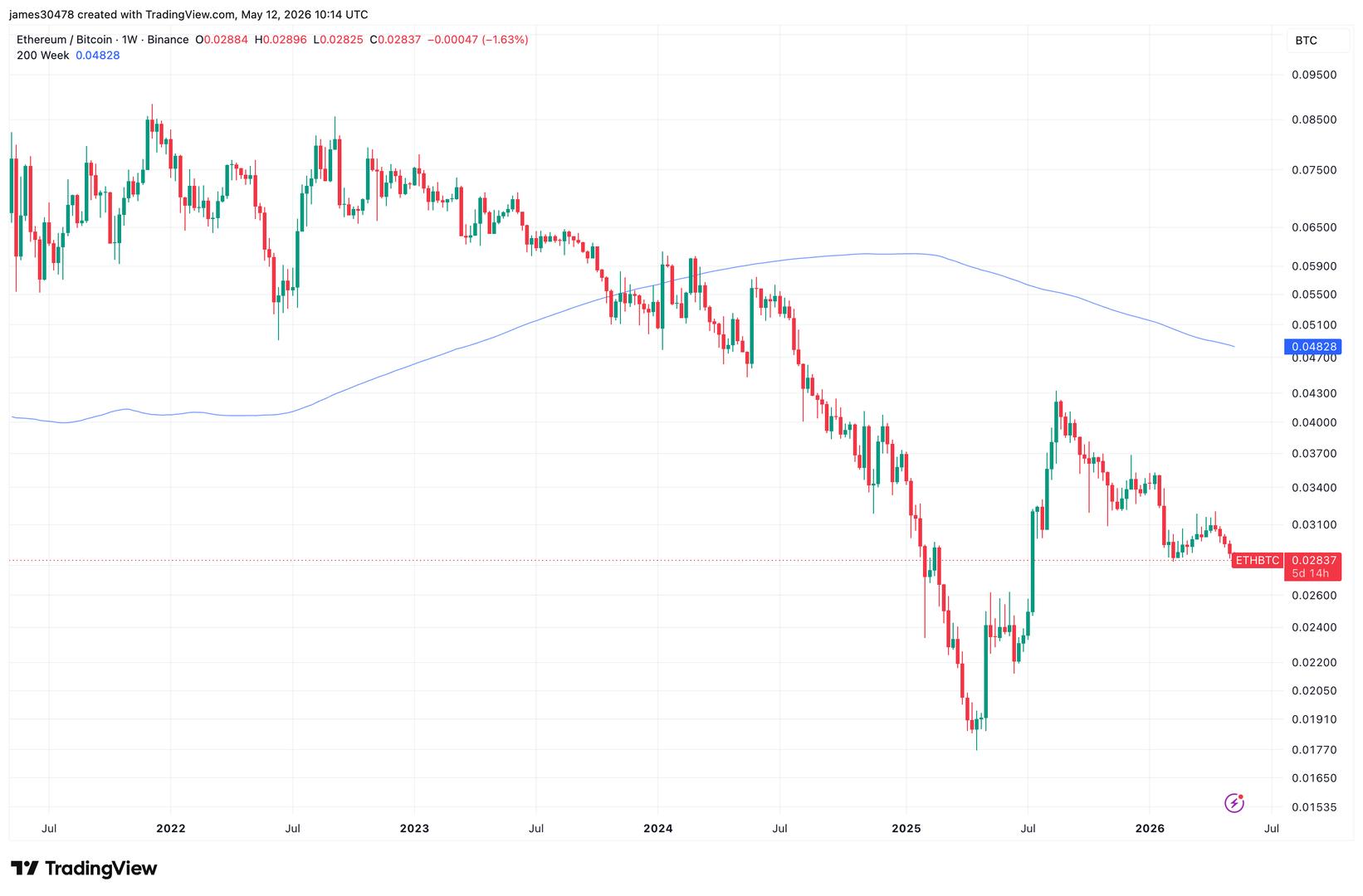
What Does the ETH/BTC Ratio Represent?
The ETH/BTC ratio is a critical metric that measures the value of Ethereum relative to Bitcoin. This ratio is instrumental for investors who are evaluating market trends, trading strategies, and overall risk sentiment. A declining ratio typically suggests that Bitcoin is outperforming Ethereum, indicating a shift in capital flow towards Bitcoin as a safer asset.
Market Context
The current decline in the ETH/BTC ratio can be attributed to several macroeconomic factors and market conditions:
- Investor Sentiment: A weakening risk appetite among investors has led to a preference for Bitcoin, which is often viewed as a store of value similar to gold. Bitcoin's historical resilience during market downturns has solidified its status as the crypto of choice in uncertain times.
- Ethereum's Challenges: Despite Ethereum's substantial upgrades and its position as the leading smart contract platform, it faces challenges such as scaling issues and competition from other blockchains. These challenges have affected its price performance relative to Bitcoin.
- Market Dynamics: The broader economic environment, including interest rates and inflation, has influenced investor behavior in digital assets. Bitcoin's perceived scarcity and deflationary attributes make it more attractive when macroeconomic conditions become unfavorable.
Why is Bitcoin Preferred Over Ethereum Right Now?
Several reasons contribute to Bitcoin's current appeal over Ethereum:
- Limited Supply: Bitcoin’s capped supply of 21 million coins creates a scarcity model that appeals to conservative investors. In contrast, Ethereum's issuance model remains inflationary, although it has moved towards deflationary mechanics post-EIP-1559.
- Institutional Adoption: Institutions are increasingly adding Bitcoin to their portfolios, viewing it as a hedge against inflation. This adoption helps stabilize Bitcoin’s price and reinforces its status as a digital asset leader.
- Market Maturity: Bitcoin has established itself as the first cryptocurrency and continues to benefit from a more mature market infrastructure, including regulated financial products, futures, and ETFs.
Impact on Investors
Short-Term Considerations
For short-term traders, the current environment may signal a shift in trading strategies. Investors focused on Ethereum might consider reallocating assets towards Bitcoin to mitigate risks associated with Ethereum's underperformance. The bearish sentiment around Ethereum could result in further price declines, making it less attractive for immediate investment.
Long-Term Outlook
From a long-term perspective, the current ETH/BTC ratio may not necessarily spell doom for Ethereum. The fundamentals driving Ethereum—such as DeFi, NFTs, and the transition to Ethereum 2.0—still hold promise. Investors should look for signs of recovery, including improvements in network activity and developer engagement, which could signal a potential rebound.
Diversification Strategies
In light of the current market dynamics, diversification remains a crucial strategy:
- Mixed Portfolios: Consider maintaining exposure to both Bitcoin and Ethereum to balance potential gains and mitigate risks.
- Alternative Assets: Look into other cryptocurrencies and blockchain projects that may present attractive investment opportunities, especially those focused on solving scalability and transaction issues.
Conclusion
The decline in the ETH/BTC ratio underscores shifting investor preferences in the current cryptocurrency landscape. While Bitcoin is gaining traction as a preferred asset during uncertain economic conditions, Ethereum’s long-term fundamentals still warrant attention. As always, investors should assess their risk tolerance and investment strategy in light of these evolving market dynamics.
Keeping a close eye on both digital assets will be crucial for making informed investment decisions moving forward.