 Go Back


Quick Take
| Asset | Price Movement | Market Sentiment | Future Outlook |
|---|---|---|---|
| Gold | Down from 2025 highs | Bearish | Uncertain |
| Silver | Significant decline | Bearish | Uncertain |
| Bitcoin | Price drop | Bearish | Potential recovery? |
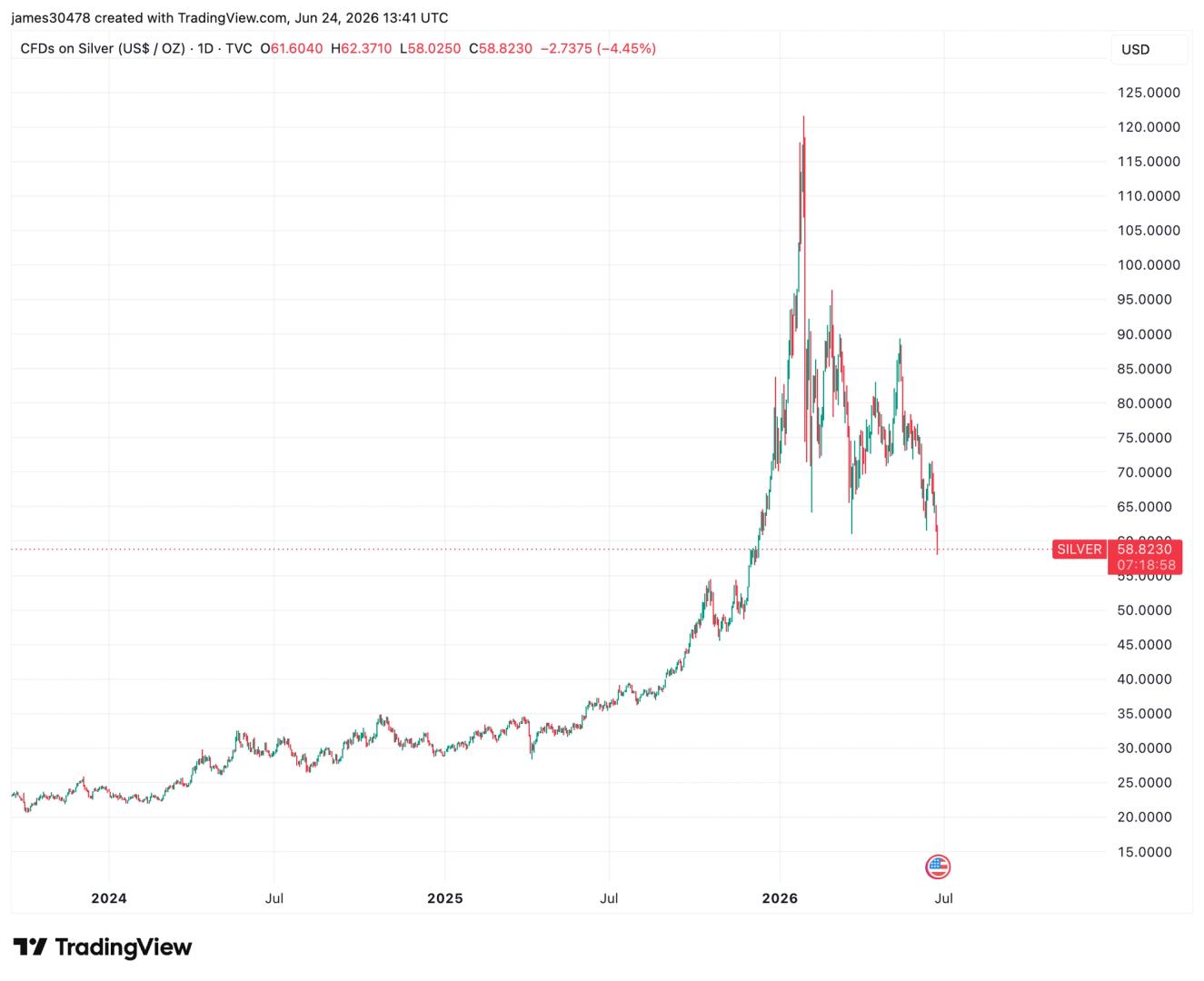
The recent downturn in precious metals and Bitcoin has raised eyebrows across financial markets. After reaching significant highs in 2025, these assets are now experiencing sharp declines as the Federal Reserve signals potential interest rate hikes. This shift could have profound implications not only for these assets but also for the broader macroeconomic landscape. Let's delve into a SWOT analysis of this scenario, which will help investors navigate the complexities of the current environment.
SWOT Analysis
Strengths
- Diversification: Gold, silver, and Bitcoin serve as alternative assets, providing diversification in portfolios, especially during market volatility.
- Inflation Hedge: Traditionally, gold and silver are viewed as safe havens against inflation. Although they are currently in decline, their historical performance suggests that they may recover in inflationary environments.
- Digital Gold Narrative: Bitcoin has often been referred to as 'digital gold.' This narrative may continue to attract institutional investors despite short-term price volatility.
Weaknesses
- Interest Rate Sensitivity: Precious metals and Bitcoin are sensitive to interest rate changes. As the Fed raises rates, the opportunity cost of holding these non-yielding assets rises, leading to their decline.
- Market Speculation: The rise of retail investors and speculation can lead to volatility in Bitcoin’s price, making it a risky asset for conservative investors.
- Short-Term Trends: The current trend suggests a short-term bearish sentiment in these assets, which may discourage new investors from entering the market.
Opportunities
- Long-Term Inflation: If inflation remains persistent, assets like gold and silver may regain their appeal as hedges, potentially driving prices higher.
- Institutional Adoption of Bitcoin: The increasing interest from institutions could provide a floor for Bitcoin prices, asserting its place in the future financial ecosystem.
- Technological Advances: Developments in blockchain technology and financial products linked to Bitcoin may offer new avenues for investment and growth in the cryptocurrency sector.
Threats
- Macroeconomic Factors: Global economic uncertainties and geopolitical tensions could further complicate market dynamics, affecting all three assets.
- Regulatory Risks: The evolving regulatory landscape for cryptocurrencies could inhibit Bitcoin's growth and adoption.
- Market Sentiment Shift: A continued negative sentiment could lead to a prolonged downturn, discouraging investment and leading to more sell-offs.
Market Context
The current market context is shaped by expectations of a monetary tightening cycle. As the Federal Reserve signals an inclination to raise interest rates, the dynamics that propelled gold, silver, and Bitcoin to their 2025 highs are rapidly shifting. The debasement trade, which saw substantial inflows into these assets as a hedge against currency devaluation, is now unwinding. Investors are recalibrating their strategies, weighing the attractiveness of non-yielding assets against the potential returns from fixed-income securities as rates rise.
Historically, gold has thrived in environments of economic instability and inflation. However, rising interest rates could diminish its allure, leading to a reevaluation of its role as a safe-haven asset. Silver, often viewed as a more volatile counterpart to gold, is experiencing similar pressures, with industrial demand affecting its price trajectory.
Bitcoin's narrative as a hedge against inflation is being tested in this rapidly changing macroeconomic environment. While its price movements can be influenced by sentiment and speculation, long-term trends indicate that Bitcoin could still find substantial support from institutional adoption and technological advancements.
Impact on Investors
For investors, the current landscape presents both challenges and opportunities. Those who have invested in gold, silver, or Bitcoin should remain vigilant, monitoring developments in monetary policy and macroeconomic indicators. The potential for recovery in these assets exists, but it may take time for the market to digest the implications of rate hikes fully.
Investors should consider diversifying their portfolios, maintaining a balance between traditional assets and cryptocurrencies, while being cautious of short-term price fluctuations. Long-term strategies focusing on fundamental values and market trends could yield positive outcomes as the economic environment stabilizes.
As we move forward, the interplay between monetary policy, inflation, and investor sentiment will remain critical in shaping the trajectories of gold, silver, and Bitcoin. Understanding these dynamics will be essential for navigating the tumultuous waters of today's financial markets.