 Go Back

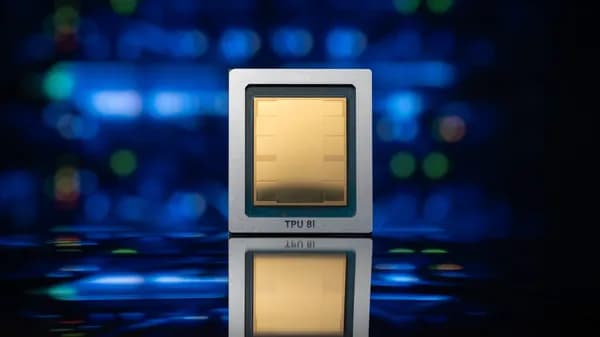
How Google's TPUs Shape the Future of AI Workloads
Artificial Intelligence (AI) continues to permeate various sectors, creating profound changes in how businesses operate and make decisions. At the heart of this AI revolution lies the need for robust computational power, which Google’s Tensor Processing Units (TPUs) are uniquely positioned to provide. This blog post delves into the role of TPUs in powering demanding AI workloads, their implications for the macroeconomic landscape, and what this means for investors.
Quick Take
| Aspect | Details |
|---|---|
| What are TPUs? | Specialized hardware designed to accelerate machine learning tasks. |
| Industry Impact | Enhances AI deployment across industries, improving efficiency and output. |
| Future Trends | Increased adoption in enterprise solutions, driving AI innovations. |

Market Context
Google’s TPU is a type of application-specific integrated circuit (ASIC) optimized for machine learning tasks. While traditional CPU and GPU architectures have been the backbone of technology infrastructure, TPUs bring a higher degree of efficiency for operations like neural network training and inference.
The growth of AI has been phenomenal in recent years. As organizations adapt to digital transformation, they increasingly rely on AI to analyze data, automate processes, and gain actionable insights. According to industry reports, the global AI market is expected to reach over $390 billion by 2025. TPUs play a pivotal role in this transformation, enabling companies to leverage machine learning at scale.
Demand for Computational Power
The demand for computational power has significantly increased due to AI's exponential growth. This trend requires not only more efficient hardware but also innovative cloud solutions to handle large datasets and complex algorithms. Google Cloud’s deployment of TPUs is an answer to this demand, providing enterprises with scalable solutions that can adapt to their changing needs.
SWOT Analysis of TPUs in AI Workloads
Strengths
- Performance: TPUs are tailored for specific tasks, offering superior performance compared to general-purpose chips.
- Scalability: Google Cloud allows businesses to scale their computing resources seamlessly, accommodating fluctuating workloads.
- Cost Efficiency: By optimizing energy usage and computation time, TPUs can lead to lower operational costs for companies leveraging AI.
Weaknesses
- Specialization: The highly specialized nature of TPUs may limit their utility in applications outside of AI and machine learning.
- Dependency on Google Cloud: Businesses utilizing TPUs may become overly dependent on Google’s ecosystem, potentially leading to vendor lock-in.
Opportunities
- Emerging Markets: As AI technology becomes more accessible, TPUs can drive innovation in developing economies, enabling local businesses to compete in the global market.
- Integration with Emerging Technologies: Combining TPUs with blockchain, IoT, and other technologies can lead to groundbreaking applications and business models.
Threats
- Competition: The rapid advancement of AI hardware from other tech giants like Nvidia and Amazon could challenge Google’s dominance in this space.
- Market Volatility: Economic instability could affect IT budgets and slow down investments in AI infrastructure, impacting demand for TPUs.
Impact on Investors
As TPUs become more integral to AI workloads, investors should consider the broader implications for technology stocks and the economy. Companies that effectively harness the power of TPUs may gain a competitive edge, translating to higher market valuations.
Moreover, the continued investment in AI infrastructure, like TPUs, could signal strong growth potential within the tech sector. Investors looking for growth opportunities may want to consider not only tech giants but also smaller firms that are innovating around AI solutions.
Future Outlook
The ongoing evolution of AI, coupled with the growing reliance on TPUs, suggests that AI workloads will increasingly dominate the tech landscape. Companies that invest in this technology will likely see enhanced efficiencies and outcomes.
In the long run, as demand for AI continues to rise, the importance of robust processing units such as TPUs will only increase, shaping not just the future of technology but also the macroeconomic environment in which we operate.
Ultimately, understanding the dynamics of TPUs and their impact on AI workloads is crucial for investors, businesses, and policymakers as they navigate the complexities of a rapidly changing digital economy.