 Go Back


Retail Investors Shape Bitcoin Market Amid Price Declines
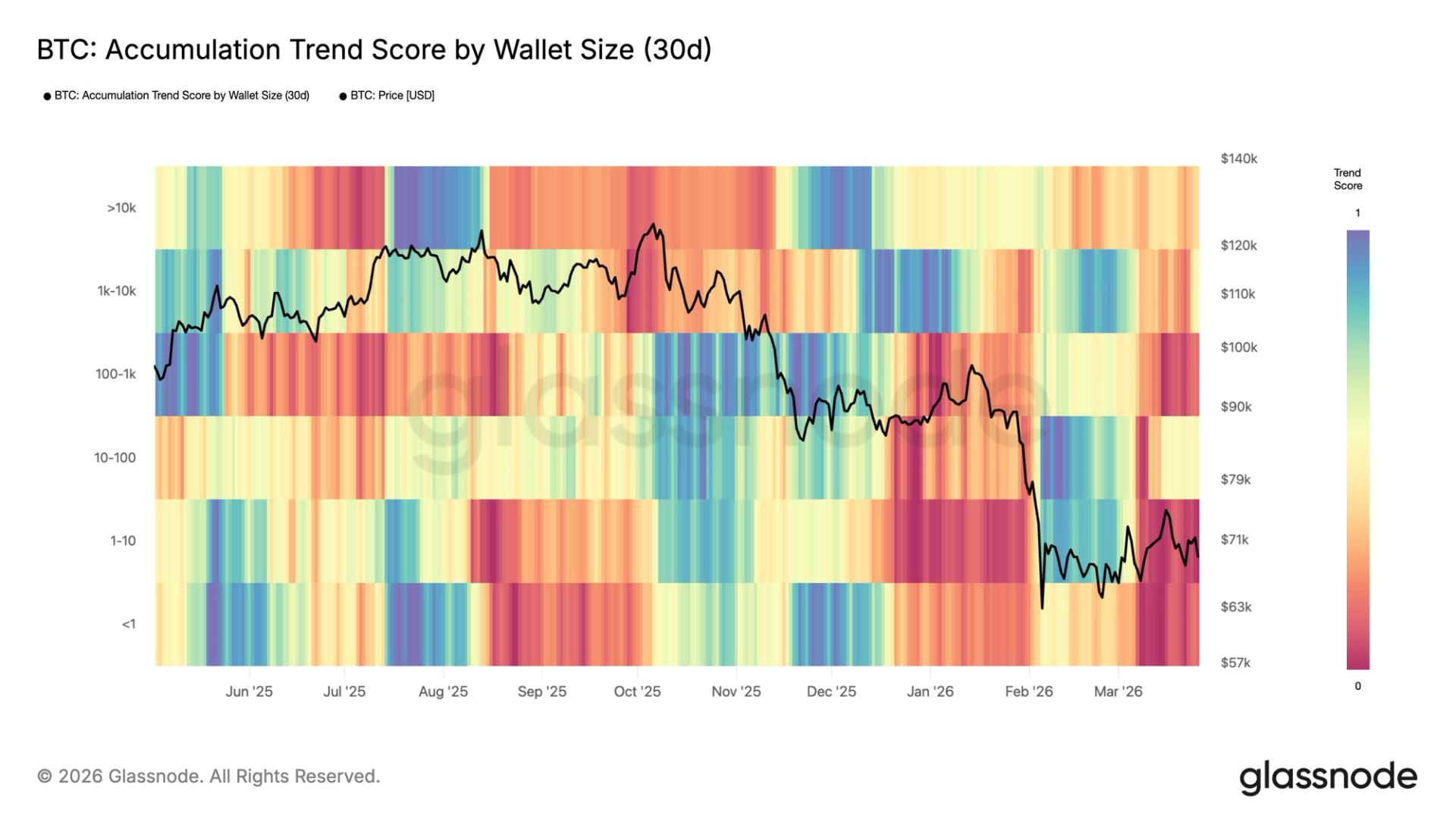
Recent data from Glassnode has revealed a significant trend as Bitcoin prices dip below the $67,000 mark. While the market experiences downward pressure, it's not the whales—those with substantial crypto holdings—that are driving the selling; instead, it's the retail investors who are increasingly becoming a notable force in determining market movements.
Quick Take
| Key Points | Description |
|---|---|
| Current Price | Bitcoin falls below $67,000 |
| Main Sellers | Retail investors dominate the selling trend |
| Whale Behavior | Whales remain largely neutral |
| Market Sentiment | Increasing volatility with retail activity |
Market Context
The cryptocurrency market is known for its volatility, and the current situation is no exception. Bitcoin's recent decline below $67,000 has put it on the radar of many investors, with growing concerns about the long-term sustainability of its price. Historically, Bitcoin has seen similar patterns of retail-driven trading, particularly during bull markets when prices surge. However, the recent sell-off suggests a potential shift in sentiment among smaller investors, who may be reacting to both price movements and broader economic conditions.
Retail investors tend to have a different risk profile compared to institutional investors and whales. When faced with declining prices, retail investors often feel compelled to sell, fearing further losses. This is in stark contrast to larger players who might see dips as buying opportunities or remain neutral, waiting for favorable conditions to re-enter the market.
The data from Glassnode indicates that while retail investors are actively selling, whales are not significantly altering their positions. This neutrality from larger holders could suggest a belief in the long-term value of Bitcoin, or it could reflect a strategic waiting game as they assess market conditions.
Historical Trends and Future Outlook
The behaviors exhibited by retail investors during Bitcoin's price fluctuations are not new. In previous cycles, we have seen retail traders react emotionally to market changes, often exacerbating volatility. During the last major bull run, retail participation soared, and with it, the price of Bitcoin reached unprecedented levels. However, when the market turned, these investors were often the first to exit, leading to rapid declines in value.
Looking ahead, this trend raises several critical questions. Will retail investors continue to drive significant price movements, especially during downturns? Or will they learn from past performances and adopt a more measured approach? Moreover, how will the actions of institutional investors and crypto whales affect the market as we progress into 2026?
Potential Scenarios
- Continued Retail Influence: If retail investors maintain their current selling behavior, we may see Bitcoin's price stabilize at lower levels, which could alter the market landscape significantly.
- Whale Intervention: Should whales decide to step in and accumulate during this dip, we might witness a rapid recovery in prices, countering the retail selling pressure.
- Market Stabilization: If both retail and institutional investors find common ground, we might see more stability in Bitcoin's price, leading to a more structured market environment.
Impact on Investors
For those invested in Bitcoin, understanding the dynamics between retail selling and whale behavior is crucial. The current environment emphasizes the importance of a diversified investment strategy, as relying solely on Bitcoin in such a volatile market could lead to disproportionate losses.
Additionally, for potential investors watching from the sidelines, this period could offer unique opportunities. As retail investors react to market signals, informed individuals may find advantageous entry points that can yield significant long-term benefits. On the flip side, the ongoing volatility underscores the need for caution and strategic planning.
Key Strategies for Investors
- Diversification: Spread investments across various assets to mitigate risk.
- Market Monitoring: Stay informed on whale movements and market sentiment.
- Long-Term Perspective: Focus on long-term growth rather than short-term price fluctuations.
In summary, the current sell-off driven by retail investors presents a complex but intriguing scenario for Bitcoin and the overall crypto market. As this dynamic unfolds, it will be essential for both current and prospective investors to carefully analyze and adapt their strategies to navigate these turbulent waters ahead.