 Go Back


Flash Crash in SpaceX Crypto Contract: Implications for Market Stability
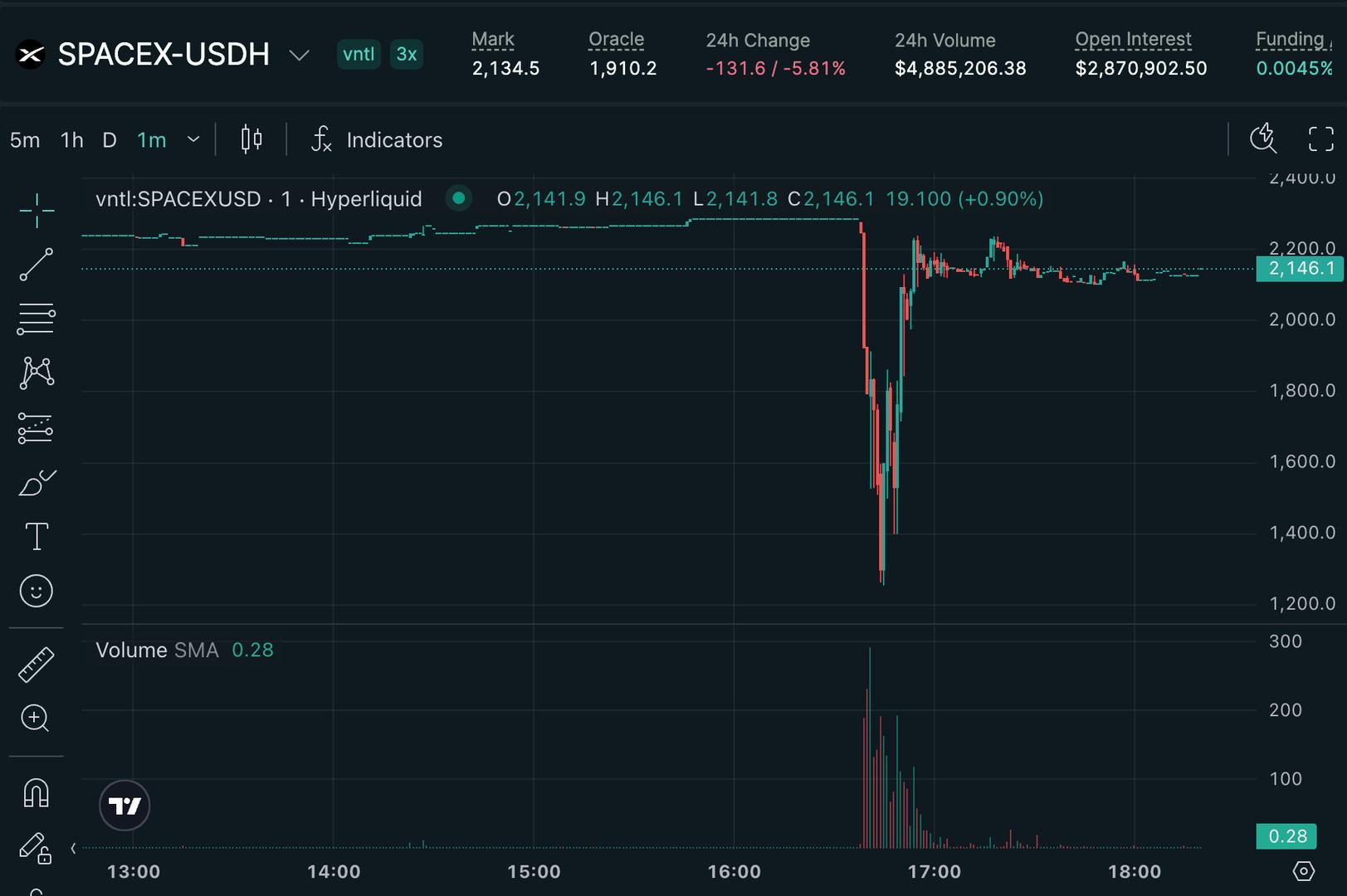
The cryptocurrency market is no stranger to volatility; however, the recent flash crash involving Hyperliquid's pre-IPO SpaceX contracts has sent shockwaves through the trading community. In a matter of just 30 minutes, a massive selloff decimated the value of these contracts by an astonishing 45%, liquidating USD 1.5 million in retail investments. This incident raises crucial questions about market infrastructure, investor protection, and regulatory oversight.
Quick Take
| Event | Details |
|---|---|
| Incident | Flash crash of Hyperliquid SpaceX contracts |
| Magnitude | 45% drop in value |
| Impact on Traders | Liquidation of USD 1.5 million |
| Market Condition | Lack of liquidity to absorb selloff |
Market Context
The flash crash highlights a significant weakness in the currently decentralized trading infrastructures that dominate the cryptocurrency landscape. Unlike traditional financial markets, where liquidity is often bolstered by centralized entities, many crypto markets operate with minimal oversight and regulation. This incident exemplifies how a lack of sufficient liquidity can exacerbate price volatility, leading to catastrophic losses for retail investors who may not have the risk management safeguards available in more regulated environments.
Historically, such events are not new in the crypto world. Flash crashes have previously occurred, particularly in unregulated segments where speculative trading is rampant. The case of Bitcoin's abrupt price drop in 2017 and the Ethereum flash crash in 2018 serve as poignant reminders of how quickly markets can react to panic, speculation, or sudden changes in trading conditions.
Impact on Investors
For retail investors, the implications of the Hyperliquid flash crash are profound. Many traders may have entered positions on the assumption that the market was stable, only to be caught off guard by a sudden and dramatic decline. This incident places a spotlight on the necessity for improved risk management practices among individual investors, particularly in the high-stakes world of cryptocurrency trading.
Key Concerns for Investors:
- Risk Exposure: Retail investors should assess their exposure to high-volatility assets and consider employing stop-loss orders or other risk mitigation strategies.
- Market Education: Investors must educate themselves on market mechanics, particularly liquidity, and how it can affect trade execution.
- Regulatory Awareness: Keeping abreast of regulatory developments is vital. As incidents like this gain public attention, there may be increased pressure for regulatory bodies to implement frameworks that protect investors from liquidity crises.
Future Predictions
Looking ahead, this flash crash may catalyze discussions regarding the necessity for enhanced regulatory frameworks within cryptocurrency markets. As incidents of such volatility continue to unfold, regulators may be prompted to implement measures aimed at improving market stability, oversight, and consumer protection. Key potential developments could include:
- Liquidity Requirements: Regulators might impose liquidity requirements for platforms offering trading in high-risk assets.
- Enhanced Transparency: Greater demands for transparency in trading practices and liquidity disclosures could be on the horizon.
- Market Structure Reforms: A shift towards centralized oversight or hybrid models that incorporate decentralized advantages while providing robust safeguards could emerge.
Conclusion
The Hyperliquid flash crash serves as a cautionary tale for both individual investors and the broader cryptocurrency ecosystem. As market participants grapple with the consequences of this event, it is imperative to advocate for a more stable and regulated trading environment. The future of cryptocurrency will depend not only on technological advancements but also on the systemic resilience of the financial structures built around it.
Tags
- Hyperliquid
- SpaceX
- Cryptocurrency
- Flash Crash
- Market Stability
- Retail Investors
- Regulation