 Go Back

Walrus Tackles AI's Memory Bottleneck: The Future of Agentic Memory
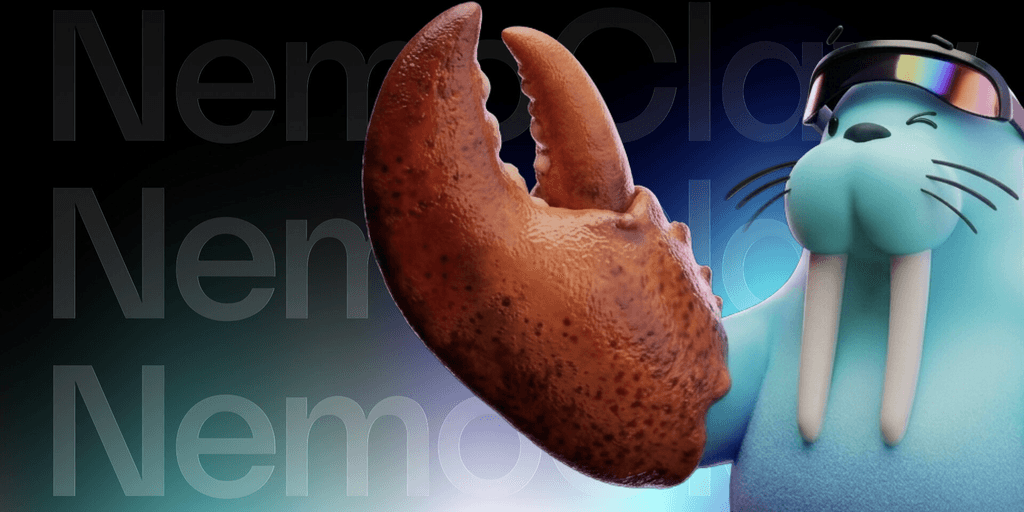
In a world where artificial intelligence is rapidly advancing, there's a critical hurdle that developers and researchers are racing to overcome: long-term memory limitations. A recent development in this arena is Walrus, a company that is targeting these memory bottlenecks head-on with its innovative MemWal technology, complemented by new integrations, OpenClaw and NemoClaw.
Quick Take
| Aspect | Details |
|---|---|
| Technology | MemWal with OpenClaw and NemoClaw |
| Objective | Enhance long-term memory in AI agents |
| Impact | More efficient, capable AI systems |
| Market Focus | AI development and integrations |
| Future Potential | Broader applications in tech and industry |
Market Context
The AI landscape is buzzing with developments, and as more businesses and industries integrate AI solutions, the demand for advanced capabilities grows. Long-term memory is a critical component in developing AI agents that can learn and adapt over time. While traditional AI systems can process information quickly, the lack of a robust long-term memory prevents them from building upon past experiences, limiting their effectiveness in complex scenarios.
Enter Walrus and its groundbreaking technology. MemWal is designed specifically to enhance the memory capabilities of AI agents. By bridging the gap between short-term processing and long-term retention, Walrus aims to create systems that can recall previous interactions and learn from them, much like humans do. This leap in memory capacity could not only revolutionize how AI operates but also impact industries reliant on AI, like healthcare, finance, and even entertainment.
SWOT Analysis
To better understand the potential of Walrus and its innovations, let’s break down its strengths, weaknesses, opportunities, and threats:
Strengths
- Innovative Technology: MemWal offers a unique solution to existing memory issues, positioning Walrus as a leader in AI development.
- Integration Potential: The introduction of OpenClaw and NemoClaw paves the way for seamless integration into existing AI frameworks, increasing its utility.
- Market Demand: With the surge in AI applications, there’s a robust market demand for systems that can enhance performance and efficiency.
Weaknesses
- Implementation Challenges: The integration of MemWal may present technical challenges that could slow down adoption.
- Complexity of AI Models: Enhancing memory in AI models could result in increased complexity, potentially leading to higher resource consumption.
Opportunities
- Expanding AI Applications: With improved memory, AI can be deployed in more varied and complex environments, increasing its applicability across sectors.
- Partnerships with Tech Giants: Collaborating with established tech companies could accelerate the adoption of MemWal technology and foster industry acceptance.
Threats
- Competition: The AI space is crowded with competitors, and other companies may develop similar memory-enhancing technologies.
- Regulatory Hurdles: As AI continues to evolve, regulatory scrutiny may impact the deployment of advanced AI systems, including those powered by MemWal.
Impact on Investors
For investors, the advancements in Walrus and its MemWal technology could represent a significant opportunity. As AI becomes increasingly integral to numerous industries, companies that prioritize enhancing AI capabilities will likely see substantial growth. Walrus, with its focus on overcoming long-term memory limitations, is positioned to capture interest not just for its current offerings, but also for future developments that could arise from its innovations.
Moreover, as AI systems become more sophisticated, businesses that leverage these advancements may experience enhanced operational efficiency. This could lead to a wave of investment in AI-driven applications, making companies like Walrus prime candidates for investor interest.
In summary, while the future of AI is filled with challenges, Walrus is stepping up to address one of the most pressing issues: long-term memory limitations. If successful, this technological leap could pave the way for a new era of intelligent systems that learn and evolve over time, making them invaluable partners across various industries. The investment landscape surrounding AI will likely become ever more lucrative as these advancements unfold, making it key for investors to keep an eye on companies pushing the envelope like Walrus.
Stay tuned, because the future of AI is not just about computation—it's about memory, and Walrus is leading the charge!